
Close Menu

    Subscribe to Updates

    Get the latest creative news from infofortech

    What's Hot

    Anthropic is letting Claude agents ‘dream’ so they don’t sleep on the job

    May 7, 2026

    Anthropic owes authors $1.5B — but the claims process is a mess

    May 7, 2026

    Mirai-Based xlabs_v1 Botnet Exploits ADB to Hijack IoT Devices for DDoS Attacks

    May 6, 2026
    Facebook X (Twitter) Instagram
    InfoForTech
    • Home
    • Latest in Tech
    • Artificial Intelligence
    • Cybersecurity
    • Innovation
    Facebook X (Twitter) Instagram
    InfoForTech
    Home»Artificial Intelligence»Cracking the cellular code with APOLLO
    Artificial Intelligence

    Cracking the cellular code with APOLLO

    InfoForTechBy InfoForTechFebruary 28, 2026No Comments3 Mins Read
    Facebook Twitter Pinterest Telegram LinkedIn Tumblr WhatsApp Email
    Cracking the cellular code with APOLLO
    Share
    Facebook Twitter LinkedIn Pinterest Telegram Email


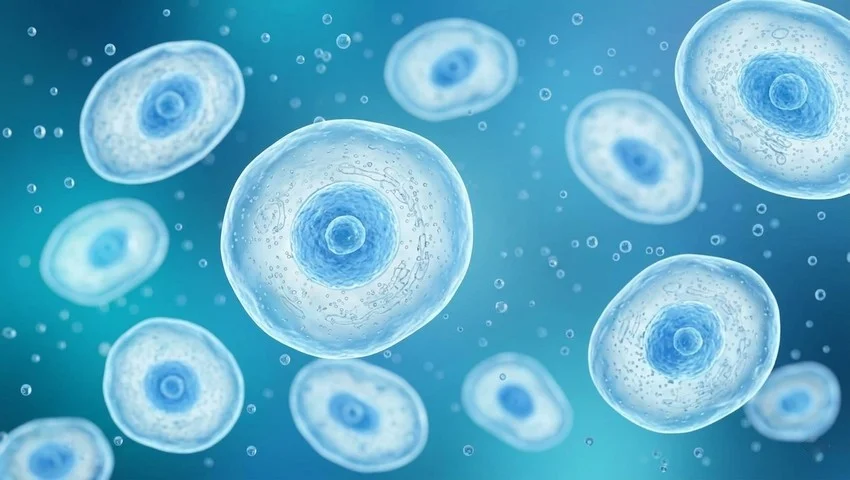
    Researchers from the Broad Institute of MIT and Harvard, the Massachusetts Institute of Technology (MIT), and ETH Zurich, in collaboration with the Paul Scherrer Institute (PSI), have introduced APOLLO – an innovative artificial intelligence framework designed to interpret complex, multilayered cellular data. This method empowers scientists to distinguish biological signals that are common across various measurement techniques from those unique to specific assays, enhancing precision in disease research and experimental planning.

    In modern cell biology, multimodal strategies are essential for capturing diverse aspects of cellular behavior. Techniques such as transcriptomics (for gene expression), chromatin accessibility assays, protein quantification, and cell morphology imaging each reveal distinct dimensions. However, integrating these data streams has been challenging, as traditional machine learning models often fuse them into a single latent representation, losing track of signal origins.

    APOLLO overcomes this by structuring data into shared and modality-specific latent spaces, akin to a Venn diagram. Overlapping biological information is encoded in a common space, while exclusive features are isolated in separate compartments. This preserves traceability and enables granular analysis.

    At its core, APOLLO employs a redesigned multimodal autoencoder with a two-stage optimization process. The first stage trains decoders to reconstruct inputs from latent spaces, establishing stable feature extraction per modality. The second refines encoders for alignment, separating shared from unique signals. Once trained, APOLLO analyzes unseen datasets, classifying information as cross-modal or modality-specific.

    Validation on synthetic datasets confirmed APOLLO’s accuracy in recovering predefined signals. In real-world applications, it excelled with paired single-cell data.

    Practically, APOLLO identifies assay-responsible biomarkers, such as DNA damage markers in cancer cells, guiding assay selection for monitoring disease or therapy responses. It also supports decisions on direct measurements versus computational inference, optimizing costs in multimodal profiling. 

    Complementing such advanced frameworks are specialized AI tools focused on early detection, like QuData’s AI-powered computer-aided detection system for breast cancer. This solution uses deep learning to automatically analyze and classify mammography images according to the BI-RADS system, marking suspicious lesions with bounding boxes, enhancing diagnostic accuracy, reducing missed diagnoses and false positives, and supporting radiologists in achieving earlier and more consistent breast cancer detection.

    Beyond cancer, APOLLO holds promise for neurodegenerative diseases like Alzheimer’s, metabolic disorders such as diabetes, and other conditions involving multilayered cellular regulation. By elucidating interactions across components, it fosters a systems-level grasp of disease mechanisms.

    Future enhancements aim to boost interpretability, extend to unpaired data (e.g., via distribution-matching losses), and scale to biobanks for precision medicine. 

    Share. Facebook Twitter Pinterest LinkedIn Tumblr Email
    InfoForTech
    • Website

    Related Posts

    Web Application Firewalls Are Broken, and Everyone Knows It

    May 6, 2026

    U.S. Officials Want Early Access to Advanced AI, and the Big Companies Have Agreed

    May 6, 2026

    Games people — and machines — play: Untangling strategic reasoning to advance AI | MIT News

    May 6, 2026

    The Coming AI Storm and Why AMD’s coming July Event Is the New Industry North Star

    May 6, 2026

    White House Weighs AI Checks Before Public Release, Silicon Valley Warned

    May 5, 2026

    You’re allowed to use AI to help make a movie, but you’re not allowed to use AI actors or writers

    May 3, 2026
    Leave A Reply Cancel Reply

    Advertisement
    Top Posts

    DoJ Disrupts 3 Million-Device IoT Botnets Behind Record 31.4 Tbps Global DDoS Attacks

    March 20, 202638 Views

    Microsoft is bringing an AI helper to Xbox consoles

    March 14, 202615 Views

    We’re Tracking Streaming Price Hikes in 2026: Spotify, Paramount Plus, Crunchyroll and Others

    February 15, 202615 Views

    This is the tech that makes Volvo’s latest EV a major step forward

    January 24, 202615 Views
    Stay In Touch
    • Facebook
    • Twitter
    • Pinterest
    • Instagram
    • YouTube
    • Vimeo
    Advertisement
    About Us
    About Us

    Our mission is to deliver clear, reliable, and up-to-date information about the technologies shaping the modern world. We focus on breaking down complex topics into easy-to-understand insights for professionals, enthusiasts, and everyday readers alike.

    We're accepting new partnerships right now.

    Facebook X (Twitter) YouTube
    Most Popular

    DoJ Disrupts 3 Million-Device IoT Botnets Behind Record 31.4 Tbps Global DDoS Attacks

    March 20, 202638 Views

    Microsoft is bringing an AI helper to Xbox consoles

    March 14, 202615 Views

    We’re Tracking Streaming Price Hikes in 2026: Spotify, Paramount Plus, Crunchyroll and Others

    February 15, 202615 Views
    Categories
    • Artificial Intelligence
    • Cybersecurity
    • Innovation
    • Latest in Tech
    © 2026 All Rights Reserved InfoForTech.
    • Home
    • About Us
    • Contact Us
    • Privacy Policy

    Type above and press Enter to search. Press Esc to cancel.

    Ad Blocker Enabled!
    Ad Blocker Enabled!
    Our website is made possible by displaying online advertisements to our visitors. Please support us by disabling your Ad Blocker.