

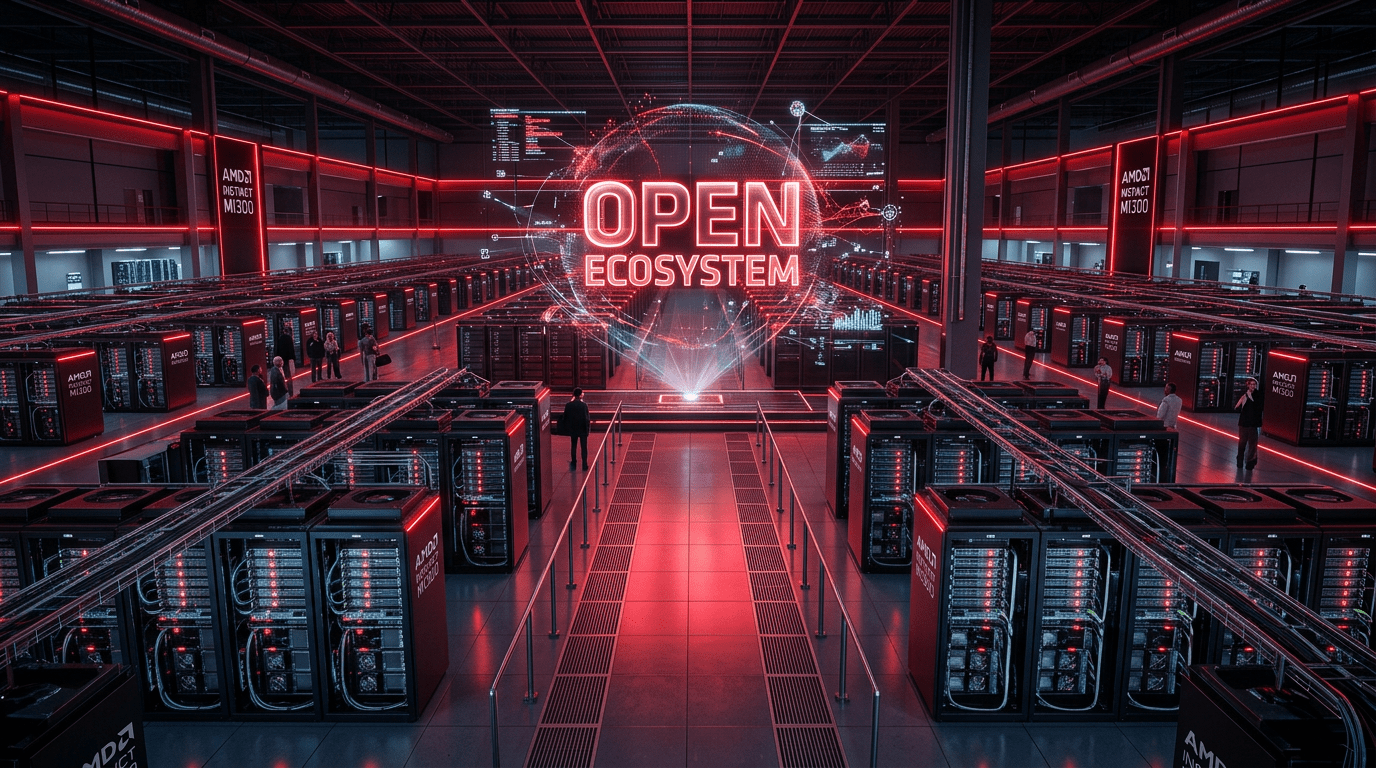
For decades, the technology industry lived and breathed by the cadence of a few select “can’t-miss” events. We remember the peak of COMDEX, the frenzy of early Macworlds, and, most importantly for the silicon world, the Intel Developer Forum (IDF). But as we move deeper into the era of Agentic AI and sovereign high-performance computing, the center of gravity is shifting.
AMD recently announced its flagship global AI event for this coming July. For those of us who track the strategic maneuvers of the semiconductor giants, the timing and tone of this announcement aren’t just marketing – they are a declaration of intent. Analysts are increasingly signaling that Dr. Lisa Su is holding a “winning hand,” and if the “open ecosystem blueprints” promised for the event deliver, we may be looking at the definitive end of the NVIDIA-only AI narrative.
The Competitive Landscape: Su’s Strategic Chess Match
To understand why this July event matters, we have to look at the current scorecard. For the last two years, NVIDIA has enjoyed a near-monopoly on high-end AI training. Jensen Huang’s “CUDA moat” seemed impenetrable. However, moats can be bridged with enough engineering talent and a more inclusive philosophy.
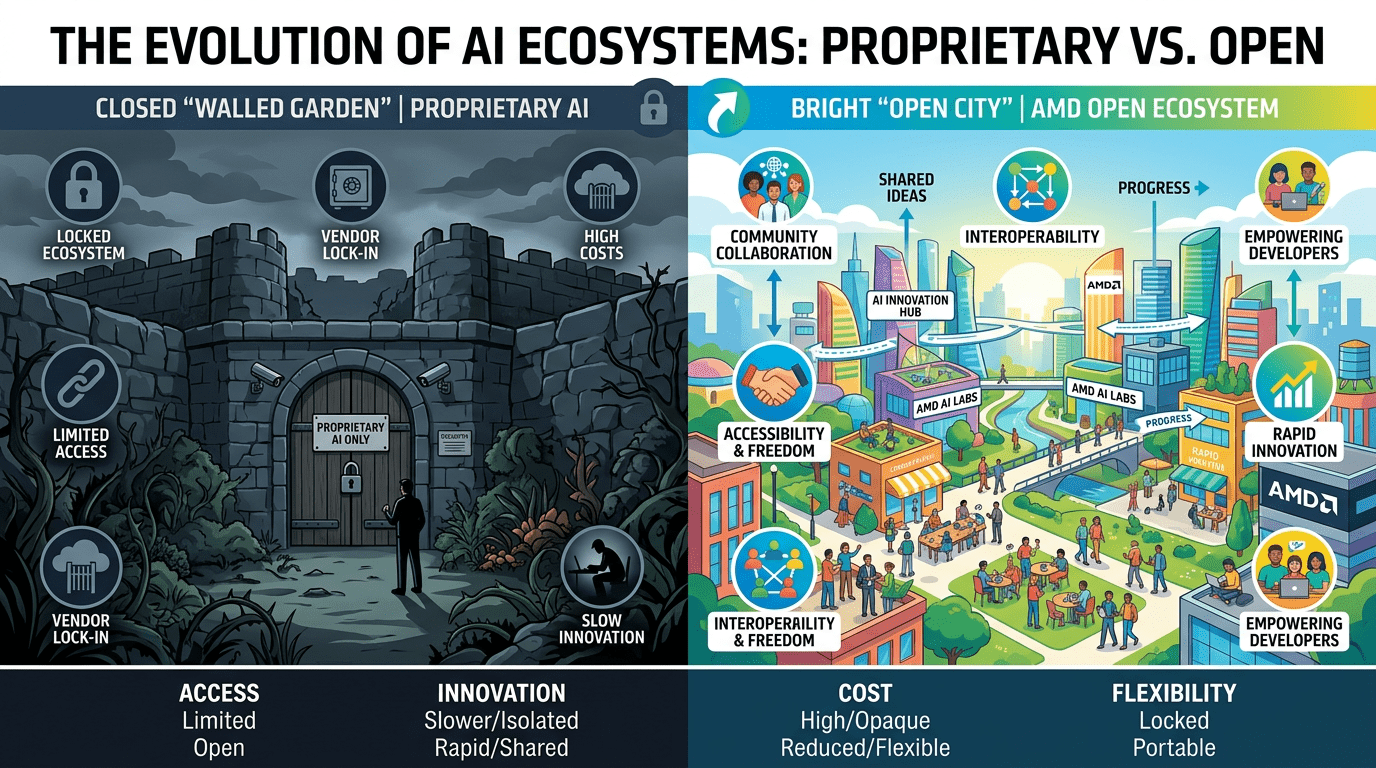
AMD has been executing a quiet but relentless pincer movement. While NVIDIA focuses on the high-margin, proprietary “walled garden” of AI, AMD has pivoted toward the open ecosystem. Their MI300 series accelerators have already proven they can compete on raw performance-per-watt, but the real win has been in the software layer with ROCm. By making it easier for developers to migrate from CUDA to an open standard, AMD is attacking NVIDIA’s greatest strength.
Against Intel, the contrast is even more stark. While Intel has struggled with foundry transitions and leadership shifts—recently seeing Lip-Bu Tan take the helm as CEO to right the ship—AMD has remained remarkably stable. Intel’s Gaudi line is respectable, but it lacks the cohesive “CPU+GPU+NPU” story that AMD has perfected across its EPYC and Ryzen portfolios.
Then there is Qualcomm. While Qualcomm owns the high-efficiency mobile NPU space, AMD is moving to capture the “Prosumer” and Enterprise AI PC market. With the launch of Ryzen AI processors, AMD is positioning itself as the only provider that can scale from a handheld device to the world’s fastest supercomputers.
The Return of the “Must-Attend” Event: Reclaiming the IDF Spirit
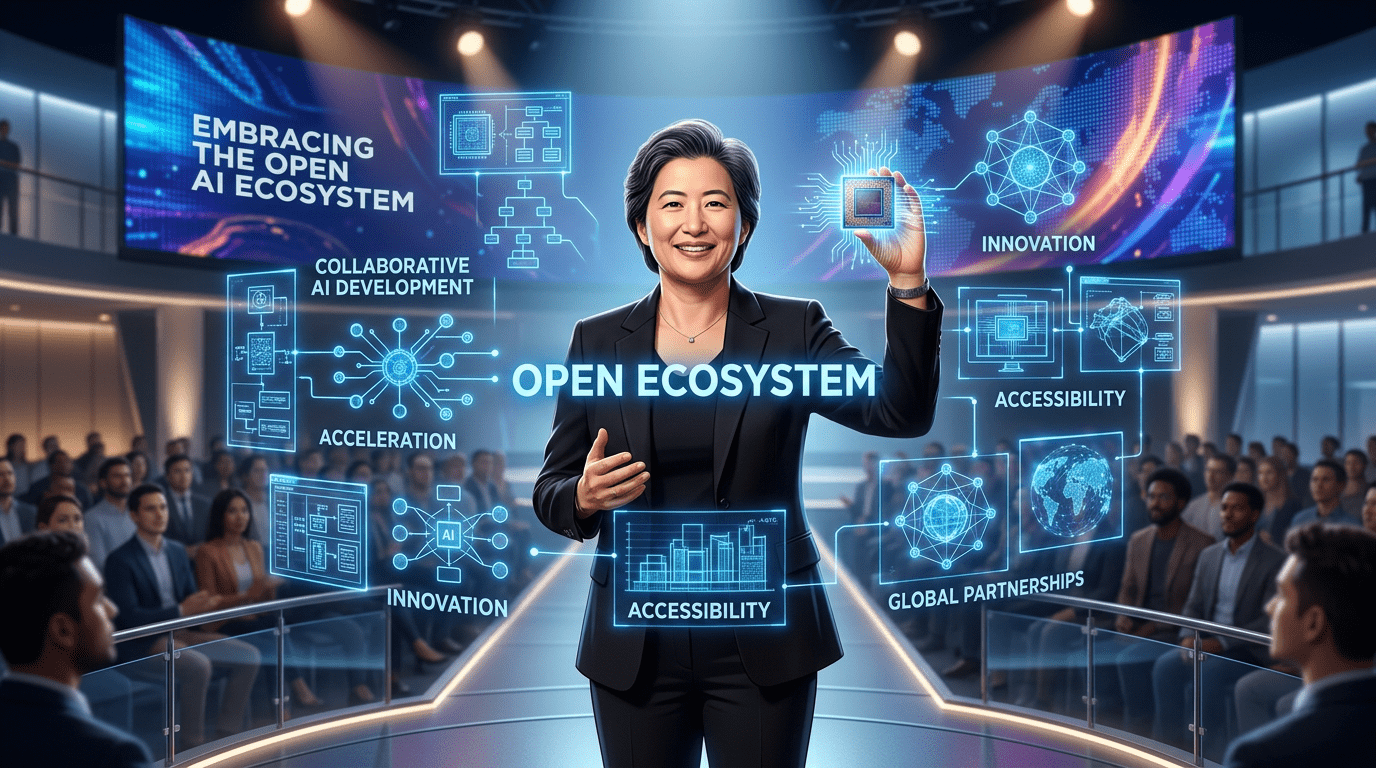
There was a time when the Intel Developer Forum (IDF) was the place where the future was written. It wasn’t just about chips; it was about the roadmap for the entire digital world. When Intel retired IDF, a vacuum was created. NVIDIA’s GTC tried to fill it, but GTC often feels like a celebration of NVIDIA rather than a collaborative blueprint for the industry.
AMD’s July event feels like the spiritual successor to IDF, but with a modern, democratic twist. By focusing on “open ecosystem blueprints,” AMD is signaling that they aren’t just selling silicon—they are organizing the resistance against proprietary lock-in.
For analysts and CTOs, this event is mandatory because it represents the first real alternative to the current AI status quo. In July, we expect to see not just new hardware, but the partnerships – with the likes of Microsoft, Meta, and Google—that prove the industry is ready to move toward a more diversified supply chain.
The Future of Agentic AI and the AMD Advantage
We are moving past the era of simple chatbots and into the age of “Agentic AI.” This is the shift from AI that answers questions to AI that performs tasks—digital twins that manage our schedules, optimize our energy grids, and even represent us in digital spaces.
This future requires massive amounts of heterogeneous computing power. It isn’t enough to have a fast GPU; you need a system where the CPU, GPU, and NPU (Neural Processing Unit) work in a unified memory architecture. This is where AMD is uniquely positioned. Because AMD owns the high-end X86 CPU market (EPYC) and has a world-class GPU architecture (CDNA/RDNA), it can build “APUs for AI” that NVIDIA simply cannot match without an X86 license.
Furthermore, the trend toward sovereign AI and localized data processing plays directly into AMD’s hands. As companies move away from the expensive, latency-heavy cloud and toward “on-prem” or “on-device” AI, the efficiency and cost-effectiveness of the AMD ecosystem become the deciding factors.
Setting the Tone: What AMD Must Do in July
To truly capitalize on this “winning hand,” AMD cannot just give us a spec sheet. They need to do three things to set the tone for the emerging AI future:
- Demonstrate Software Parity: The “CUDA excuse” needs to die. AMD must showcase a seamless, one-click migration path for enterprise AI workloads that proves ROCm is ready for prime time.
- The “AI PC” Definitive Roadmap: With the competition heating up from Qualcomm’s Snapdragon X Elite and Intel’s Lunar Lake, AMD needs to show that its Ryzen AI integration offers a superior balance of performance and legacy app compatibility.
- Commitment to Transparency: In an era where “Black Box” AI is causing ethical concerns, AMD’s “Open” messaging needs to include a commitment to transparent, auditable hardware-level security.
If AMD can land these three punches, they won’t just be a “second source” for AI chips; they will become the architects of the next decade of computing.
The Ethical Frontier: Digital Twins and Beyond
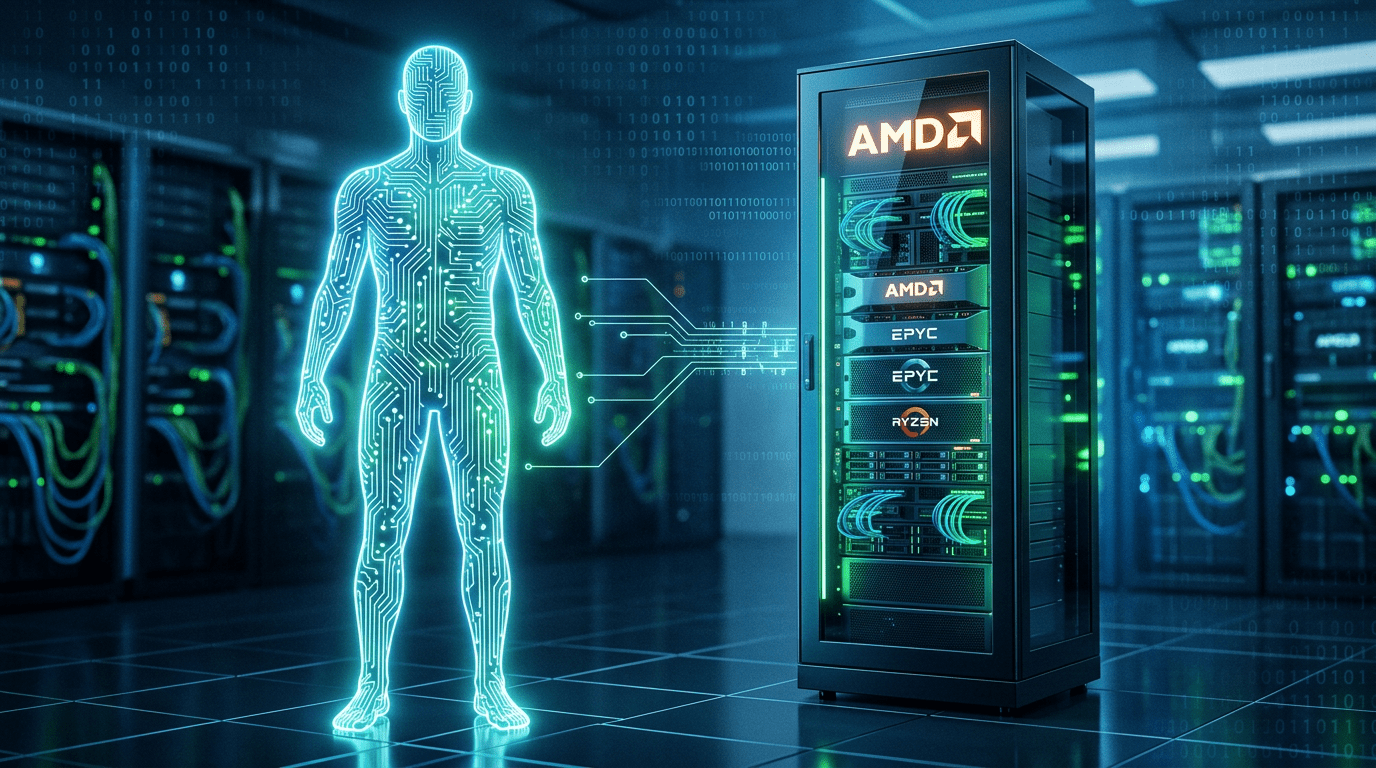
As a futurist, I am particularly interested in how AMD’s hardware will support the ethical deployment of digital twins. To reach a point where a digital entity can act on our behalf, we need hardware that is not only fast but inherently secure. AMD’s long history with secure processor technology gives it a head start here.
We are looking at a future where AI isn’t an app, but a layer of the operating system itself. AMD’s July event will likely be the moment where this “AI-as-OS” transition becomes a concrete reality for the enterprise.
Wrapping Up
AMD’s July event is shaping up to be the most consequential semiconductor summit of the year. By leaning into an open ecosystem, Dr. Lisa Su is offering the industry a “get out of jail free” card from the constraints of proprietary AI stacks.
AMD has the competitive momentum against Intel, the architectural advantages over NVIDIA in unified computing, and the enterprise scale that Qualcomm still lacks. If they can execute on their “blueprints” and provide a clear, developer-friendly path forward, the “winning hand” won’t just be an analyst talking point—it will be the foundation of the next industrial revolution. July isn’t just about an announcement; it’s about the official start of the OpenAI era.

As President and Principal Analyst of the Enderle Group, Rob provides regional and global companies with guidance in how to create credible dialogue with the market, target customer needs, create new business opportunities, anticipate technology changes, select vendors and products, and practice zero dollar marketing. For over 20 years Rob has worked for and with companies like Microsoft, HP, IBM, Dell, Toshiba, Gateway, Sony, USAA, Texas Instruments, AMD, Intel, Credit Suisse First Boston, ROLM, and Siemens.
