
Close Menu

    Subscribe to Updates

    Get the latest creative news from infofortech

    What's Hot

    Alaska Air sustainability director lays out strategy for low-carbon flying at Climate Week NYC – GeekWire

    September 24, 2026

    Containment is dead: Five takeaways from the AI ROI in Contact Center Summit

    September 23, 2026

    How to Use AI Agents to Fact-Check and Copy Edit Your Content

    September 23, 2026
    Facebook X (Twitter) Instagram
    InfoForTech
    • Home
    • Latest in Tech
    • Artificial Intelligence
    • Cybersecurity
    • Innovation
    Facebook X (Twitter) Instagram
    InfoForTech
    Home»Artificial Intelligence»Will Humans Live Forever? AI Races to Defeat Aging
    Artificial Intelligence

    Will Humans Live Forever? AI Races to Defeat Aging

    InfoForTechBy InfoForTechApril 20, 2026No Comments3 Mins Read
    Facebook Twitter Pinterest Telegram LinkedIn Tumblr WhatsApp Email
    Will Humans Live Forever? AI Races to Defeat Aging
    Share
    Facebook Twitter LinkedIn Pinterest Telegram Email


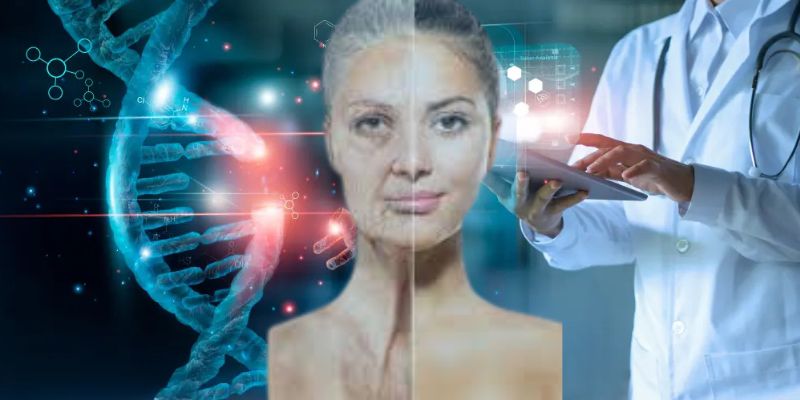
    It’s a concept that both scares and delights: the possibility that aging might not be an inevitable human fate, as was once assumed. It seemed like the kind of thing that only exists in science fiction along with flying cars and teleportation for the foreseeable future.

    Now though, we have a new and rapidly growing tool for doing just that: artificial intelligence.

    Researchers and other experts are currently suggesting that artificial intelligence is capable of solving one of the hardest questions in biology, how to decelerate, halt and reverse the process of ageing itself. This is not necessarily about making us live longer.

    It may be possible to use AI to achieve the biological equivalent of living healthier for longer, as seen with this report.

    But I’ll put a pause to that for a second. You may ask: “But how can AI be used to achieve this?” Well, as this explains in more detail, researchers can use AI to model how cells work, how proteins fold and which compounds can work together, instead of using real-life tests to test these interactions and reactions.

    In doing so, scientists can use AI to replicate multiple experiments to work out the potential results, and these are all occurring much faster than traditional scientific studies.

    This is also the reason why biotech companies are making significant developments in 2025.

    That said, a dose of reality is in order. Many researchers don’t share the enthusiasm for imminent life-extending interventions.

    They see aging not as a single problem with a single fix, but rather as a complex network of interlocking processes, the mechanisms of which we still do not fully understand. AI can help, no doubt, but it’s certainly no silver bullet.

    In the face of these caveats, however, one thing is certain, lots of investors are betting on the power of artificial intelligence to extend human lifespan.

    Billionaires and venture capitalists, as well as big pharma firms, all see the same thing: AI can fast-track scientific discovery, which might translate into longer lives.

    Some companies are already applying AI to the identification of so-called “aging biomarkers,” which are molecular signals in the body that reveal how quickly a person is aging from the inside out; that development in and of itself is a major milestone, as emerging biotech companies are focusing on.

    There’s also an awkward side issue that lingers: who gets to have this? If AI does result in longer lifespans, it certainly won’t come equally to everyone all at once.

    Will it be another example of the rich getting richer (and living longer)? This issue, and the related concerns of equity and fairness, are already being discussed as AI transforms healthcare systems in different parts of the world.

    Then there’s the human part. In other words, everyone wants the same thing, more time, more birthdays, more conversations, more second chances. But if there was more time, how would we spend it?

    We might solve the aging problem, but we’d be faced with dozens of other issues. It’s true that while some scientists are optimistic about the chances, others are skeptical or excited.

    I would say we are in the middle, and that AI isn’t the miracle cure it seems, but it certainly speeds things up, and not in a way that we would’ve imagined. Yes, the possibility of reversing the effects of aging sounds crazy at this moment. But neither does talking to a machine a few years ago. And that’s where we are today.

    Share. Facebook Twitter Pinterest LinkedIn Tumblr Email
    InfoForTech
    • Website

    Related Posts

    How to Use AI Agents to Fact-Check and Copy Edit Your Content

    September 23, 2026

    Poitras Center to fuel early careers of 50 young scientists dedicated to psychiatric disorders research | MIT News

    September 22, 2026

    Why AI Adaptation, Not Adoption, Is the Real Work Ahead

    September 22, 2026

    AI in Business: Overcoming Deployment Challenges

    September 21, 2026

    A new chapter for MIT Reads | MIT News

    September 19, 2026

    AI that knows its limits

    September 18, 2026
    Leave A Reply Cancel Reply

    Advertisement
    Top Posts

    A Billionaire-Backed Startup Wants to Grow ‘Organ Sacks’ to Replace Animal Testing

    March 23, 2026380 Views

    DoJ Disrupts 3 Million-Device IoT Botnets Behind Record 31.4 Tbps Global DDoS Attacks

    March 20, 202641 Views

    Mayiduo spent S$1M to produce his movie. It broke even & that’s a win in S’pore.

    March 31, 202634 Views

    How is Luckin Coffee expanding rapidly in S’pore while keeping its coffee so cheap?

    April 23, 202622 Views
    Stay In Touch
    • Facebook
    • Twitter
    • Pinterest
    • Instagram
    • YouTube
    • Vimeo
    Advertisement
    About Us
    About Us

    Our mission is to deliver clear, reliable, and up-to-date information about the technologies shaping the modern world. We focus on breaking down complex topics into easy-to-understand insights for professionals, enthusiasts, and everyday readers alike.

    We're accepting new partnerships right now.

    Facebook X (Twitter) YouTube
    Most Popular

    A Billionaire-Backed Startup Wants to Grow ‘Organ Sacks’ to Replace Animal Testing

    March 23, 2026380 Views

    DoJ Disrupts 3 Million-Device IoT Botnets Behind Record 31.4 Tbps Global DDoS Attacks

    March 20, 202641 Views

    Mayiduo spent S$1M to produce his movie. It broke even & that’s a win in S’pore.

    March 31, 202634 Views
    Categories
    • Artificial Intelligence
    • Cybersecurity
    • Innovation
    • Latest in Tech
    © 2026 All Rights Reserved InfoForTech.
    • Home
    • About Us
    • Contact Us
    • Privacy Policy

    Type above and press Enter to search. Press Esc to cancel.

    Ad Blocker Enabled!
    Ad Blocker Enabled!
    Our website is made possible by displaying online advertisements to our visitors. Please support us by disabling your Ad Blocker.