

For years, the “wall” between storage and networking administrators has been a fixture of the enterprise data center. I spent the early part of my career as a network engineer and the arena of storage was a bit of a black box, and for most companies, that’s still the case.
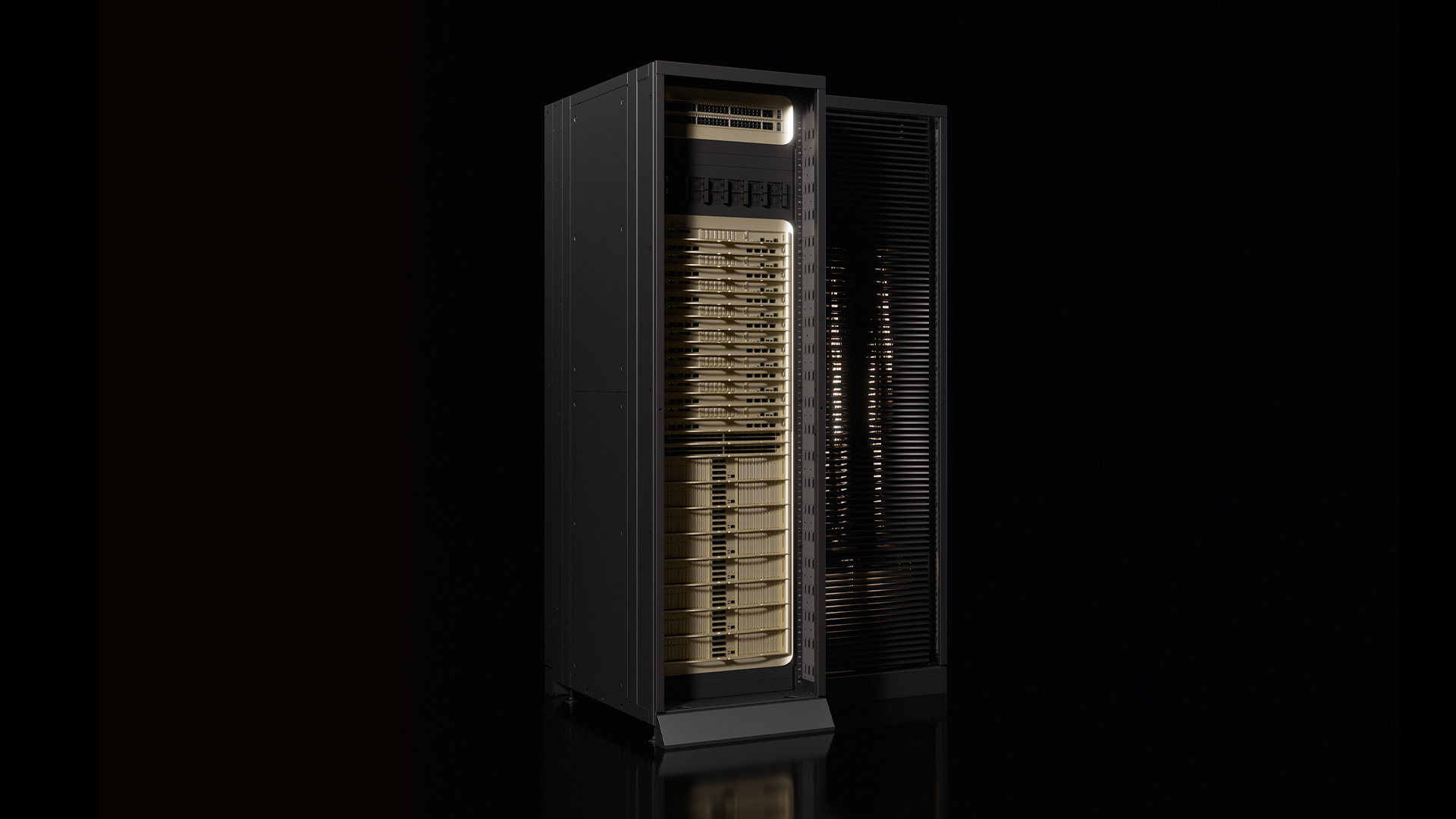
This is because these networks operated differently. Storage teams obsessed over IOPS and durability, while networking teams lived and breathed latency and throughput. But at Nvidia GTC 2026, Chief Executive Jensen Huang just introduced a platform that effectively tears that wall down: the Nvidia BlueField-4 STX storage architecture (pictured).
Nvidia announced a modular reference architecture that delivers up to five times more token throughput and four times more energy efficiency compared with traditional central processing unit-based storage designs. However, it’s important to look past numbers. This innovation that just increases speed but is a rethink of how we define “storage” for the era of agentic artificial intelligence.
The rise of the ‘context layer’
We are moving past the era of simple “chatbots” into the era of agentic AI — systems that don’t just answer questions but execute multistep tasks across sessions. These agents require contextual working memory.
Traditional storage (think high-capacity, general-purpose arrays) is too slow for this. When an AI agent needs to recall a specific detail from a 10-hour conversation or a massive technical manual to take its next step, waiting for a traditional data path creates a bottleneck that leaves expensive graphics processing units sitting idle and there is no bigger waste of money than GPUs that aren’t being used.
The BlueField-4 STX introduces the Nvidia CMX (Context Memory Storage) platform. This isn’t just “more disk,” but rather a high-performance context layer that expands GPU memory across the rack. It allows AI factories to ingest data twice as fast and maintain the responsiveness required for long-context reasoning.
Hardware synergy: The Vera Rubin platform
The technical differentiation behind STX lies in its integration with the Nvidia Vera Rubin platform. The architecture employs a storage-optimized BlueField-4 processor that combines:
- The Nvidia Vera CPU: Handling the heavy lifting of complex logic.
- Nvidia ConnectX-9 SuperNIC: Providing the ultra-low-latency pipe.
- Nvidia Spectrum-X Ethernet: Ensuring the fabric can handle the scale of an AI factory.
By offloading storage tasks from the general-purpose CPU to this specialized STX architecture, Nvidia is claiming a fourfold jump in energy efficiency. In an era where power availability is the single biggest constraint on data center expansion, that’s not just a “nice-to-have” — it’s the difference between scaling or stalling.
Why the network and storage admin must come together
This announcement serves as a final notice: The silos must end. If you are a network administrator, you are now in the storage business. If you are a storage administrator, you are now in the networking business.
- The network is the storage bus: With BlueField-4 STX and Spectrum-X, the “storage” is no longer a box at the end of a wire; it is a distributed layer of the network fabric itself. Performance tuning now requires a deep understanding of RDMA, RoCE, and how data moves between the CMX layer and the GPU.
- Latency is the only metric that matters: In traditional enterprise apps, a few milliseconds of storage latency was annoying. In agentic AI, it’s catastrophic to “token flow.” Admins must work together to eliminate every microsecond of friction in the data path.
- Unified management: The STX architecture relies on Nvidia DOCA and Nvidia AI Enterprise software. This means the software stack for managing your network interface is the same stack managing your storage acceleration.
Built with extreme co-design
The Nvidia BlueField-4 STX architecture is a product of what Huang calls extreme co-design. At the GTC, Nvidia held an analyst session on this topic and how it was used to create the new solution. Extreme co-design is a multidisciplinary engineering approach that treats the entire data center as a single, integrated unit to eliminate the traditional “wall” between networking and storage.
By tightly coupling the Vera CPU, ConnectX-9 SuperNIC and Spectrum-X Ethernet, Nvidia has created a distributed context layer that allows AI agents to access working memory with four times the energy efficiency and five times the token throughput of CPU-based designs. This synergy ensures that the network effectively becomes the storage bus, providing the ultra-low latency required for the multistep reasoning tasks of agentic AI.
Regarding the role of storage within this co-designed ecosystem, Senior Vice President of Networking Kevin Deierling noted: “Thinking takes planning. You write a to-do list. You need to store that somewhere, and so when Jensen was talking about STX and CMX, CMX is the cache optimized version of that. All of this needs to be optimized, because thinking requires memory, and that memory ultimately is part of this co-design optimization across the entire data center.”
This is just the latest product that Nvidia has created using this methodology. Others include Vera Rubin, Groq 3 LPX, Spectrum-X, IGX Thor and many others. It’s this ability to think at a system level that has created the moat Nvidia seems to have around it.
Broad industry momentum
The industry isn’t waiting around to see if this works. The list of partners is a “who’s who” of the infrastructure world.
- Early adopters: Cloud and AI leaders such as CoreWeave, Oracle Cloud and Mistral AI are already moving toward STX for context memory.
- Infrastructure partners: Heavyweights such as Dell Technologies, Hewlett Packard Enterprise, NetApp and Pure Storage (now Everpure) are co-designing systems based on this architecture.
- Manufacturing: Supermicro and QCT are already building the physical STX-based racks.
The bottom line
It’s easy to look at BlueField-4 STX as a storage-optimized hardware refresh, but it’s bringing storage into the AI factory as an integrated component. It recognizes that storage for AI isn’t about long-term archiving — it’s about active reasoning.
For the information technology professional, the message from GTC is about staying ahead of the curve. Get out of your comfort zone and start learning the other side of the aisle. Storage and networking are coming together, and those engineers who work in silos will be on the outside looking in. The most successful data center architects of 2026 will be those who can speak “Spectrum-X” and “context memory” in the same breath.
Platforms based on STX are expected to hit the market in the second half of 2026. The clock is ticking.
Zeus Kerravala is a principal analyst at ZK Research, a division of Kerravala Consulting. He wrote this article for SiliconANGLE.
Image: Nvidia
Support our mission to keep content open and free by engaging with theCUBE community. Join theCUBE’s Alumni Trust Network, where technology leaders connect, share intelligence and create opportunities.
- 15M+ viewers of theCUBE videos, powering conversations across AI, cloud, cybersecurity and more
- 11.4k+ theCUBE alumni — Connect with more than 11,400 tech and business leaders shaping the future through a unique trusted-based network.
About SiliconANGLE Media
Founded by tech visionaries John Furrier and Dave Vellante, SiliconANGLE Media has built a dynamic ecosystem of industry-leading digital media brands that reach 15+ million elite tech professionals. Our new proprietary theCUBE AI Video Cloud is breaking ground in audience interaction, leveraging theCUBEai.com neural network to help technology companies make data-driven decisions and stay at the forefront of industry conversations.
