
Close Menu

    Subscribe to Updates

    Get the latest creative news from infofortech

    What's Hot

    ShotCode bets on human creativity as AI reshapes advertising video production 

    November 3, 2026

    How To Choose The Right Gaming Monitor For You

    November 3, 2026

    Here’s Why You Shouldn’t Use AI to Vote

    November 3, 2026
    Facebook X (Twitter) Instagram
    InfoForTech
    • Home
    • Latest in Tech
    • Artificial Intelligence
    • Cybersecurity
    • Innovation
    Facebook X (Twitter) Instagram
    InfoForTech
    Home»Artificial Intelligence»Regina Barzilay and Jim Collins win Pritzker Prize for AI and Science Research Excellence for work in AI-enabled antibiotic discovery | MIT News
    Artificial Intelligence

    Regina Barzilay and Jim Collins win Pritzker Prize for AI and Science Research Excellence for work in AI-enabled antibiotic discovery | MIT News

    InfoForTechBy InfoForTechNovember 3, 2026No Comments3 Mins Read
    Facebook Twitter Pinterest Telegram LinkedIn Tumblr WhatsApp Email
    Regina Barzilay and Jim Collins win Pritzker Prize for AI and Science Research Excellence for work in AI-enabled antibiotic discovery | MIT News
    Share
    Facebook Twitter LinkedIn Pinterest Telegram Email


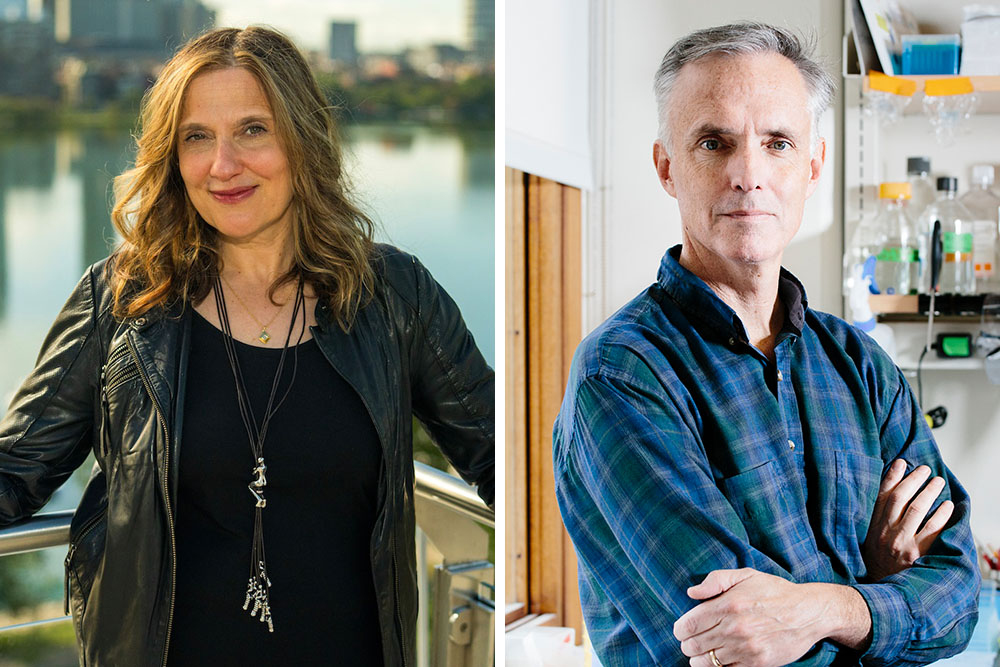
    Regina Barzilay, MIT’s School of Engineering Distinguished Professor of AI and Health, and James Collins, MIT’s Termeer Professor of Medical Engineering and Science, are the recipients of the 2026 Pritzker Prize for AI in Science Research Excellence. 

    The award recognizes their joint work in “pioneering AI-enabled antibiotic discovery, integrating deep learning, bioengineering, and experimental validation to identify novel antibacterial candidates against drug-resistant pathogens.” 

    Established in 2024 by the University of Chicago in partnership with Caltech, the Pritzker Prize for AI in Science Research Excellence recognizes contributions that jointly advance AI and the natural sciences or engineering.

    Barzilay and Collins, who are faculty co-leads of the Abdul Latif Jameel Clinic for Machine Learning in Health (Jameel Clinic) and affiliates of the MIT Schwarzman College of Computing and the MIT School of Engineering, published their first breakthrough paper together in 2020 with then-MIT postdoc and first author Jonathan Stokes (who worked in the Collins lab from 2017 to 2021) in Cell. The paper described the first artificial intelligence-discovered antibiotic, called halicin, named for the fictional AI system HAL 9000 in Stanley Kubrick’s 1968 film 2001: A Space Odyssey.

    A broad-spectrum antibiotic that was originally studied as a potential diabetes drug, halicin was identified by a deep learning model trained on 2,500 molecules. Upon testing, the research team found that halicin was able to kill antibiotic-resistant bacteria (i.e., “superbugs”) such as Clostridium difficile, Acinetobacter baumannii, and Mycobacterium tuberculosis. A discovery process that once took years was completed in just a few weeks. Amidst the growing alarm around the global antimicrobial resistance crisis, the results demonstrated that AI could prove to be an effective tool for rapidly identifying new and effective antibiotics.

    Following halicin, Barzilay and Collins worked with Stokes (now an assistant professor at McMaster University) to use machine learning to identify abaucin in 2023, a narrow-spectrum antibiotic demonstrating effectiveness against A. baumannii, an antibiotic-resistant bacteria commonly found on hospital doorknobs and in the wounds of U.S. soldiers stationed in Iraq and Afghanistan. Notably, abaucin’s “narrow spectrum” efficacy against a single species of treatment-resistant bacteria is its main advantage, minimizing the likelihood of bacteria developing resistance and harming beneficial bacteria in the gut.

    “Historically, antibiotic discovery has depended on laborious, trial-and-error strategies,” says Collins. “This process is slow, costly, and unpredictable, often yielding few viable antibiotic candidates. With generative AI, we’re now seeing a shift from AI being used as a tool for discovery to AI being used as a design tool. This shift opens new frontiers in antibiotic discovery that could bring us the next generation of lifesaving drugs.”

    In Barzilay’s view, “despite significant progress in molecular modeling, we are still in early stages of drug discovery. With AI, we can only automate parts of the pipeline, rather than totally transforming the discovery process. To make it happen, we need to work really hard to build realistic AI models of human biology.”

    Share. Facebook Twitter Pinterest LinkedIn Tumblr Email
    InfoForTech
    • Website

    Related Posts

    Powering up for a pivotal moment | MIT News

    November 3, 2026

    Q&A: Hey AI, who should I vote for this year? | MIT News

    October 31, 2026

    MIT affiliates named 2026 Schmidt Sciences AI2050 Fellows | MIT News

    October 31, 2026

    OpenAI makes AI decisions 10x faster

    October 30, 2026

    3 Questions: Why infrastructure is entering a defining era | MIT News

    October 29, 2026

    How to Build a Voice-First AI Rehearsal Partner

    October 28, 2026
    Leave A Reply Cancel Reply

    Advertisement
    Top Posts

    A Billionaire-Backed Startup Wants to Grow ‘Organ Sacks’ to Replace Animal Testing

    March 23, 2026529 Views

    Mayiduo spent S$1M to produce his movie. It broke even & that’s a win in S’pore.

    March 31, 202644 Views

    DoJ Disrupts 3 Million-Device IoT Botnets Behind Record 31.4 Tbps Global DDoS Attacks

    March 20, 202643 Views

    Here’s who got richer in 2026—and who lost billions

    September 5, 202634 Views
    Stay In Touch
    • Facebook
    • Twitter
    • Pinterest
    • Instagram
    • YouTube
    • Vimeo
    Advertisement
    About Us
    About Us

    Our mission is to deliver clear, reliable, and up-to-date information about the technologies shaping the modern world. We focus on breaking down complex topics into easy-to-understand insights for professionals, enthusiasts, and everyday readers alike.

    We're accepting new partnerships right now.

    Facebook X (Twitter) YouTube
    Most Popular

    A Billionaire-Backed Startup Wants to Grow ‘Organ Sacks’ to Replace Animal Testing

    March 23, 2026529 Views

    Mayiduo spent S$1M to produce his movie. It broke even & that’s a win in S’pore.

    March 31, 202644 Views

    DoJ Disrupts 3 Million-Device IoT Botnets Behind Record 31.4 Tbps Global DDoS Attacks

    March 20, 202643 Views
    Categories
    • Artificial Intelligence
    • Cybersecurity
    • Innovation
    • Latest in Tech
    © 2026 All Rights Reserved InfoForTech.
    • Home
    • About Us
    • Contact Us
    • Privacy Policy

    Type above and press Enter to search. Press Esc to cancel.

    Ad Blocker Enabled!
    Ad Blocker Enabled!
    Our website is made possible by displaying online advertisements to our visitors. Please support us by disabling your Ad Blocker.