
Close Menu

    Subscribe to Updates

    Get the latest creative news from infofortech

    What's Hot

    Check Point Warns of Management Server Zero-Day Exploited in Targeted Attacks

    September 23, 2026

    There are 40K attractive jobs available in Singapore. MOM data reveals where they are.

    September 22, 2026

    How to Claim Your Cut of Apple’s $250 Million Siri Settlement

    September 22, 2026
    Facebook X (Twitter) Instagram
    InfoForTech
    • Home
    • Latest in Tech
    • Artificial Intelligence
    • Cybersecurity
    • Innovation
    Facebook X (Twitter) Instagram
    InfoForTech
    Home»Artificial Intelligence»Mamba-3 – the next evolution in language modeling
    Artificial Intelligence

    Mamba-3 – the next evolution in language modeling

    InfoForTechBy InfoForTechFebruary 3, 2026No Comments3 Mins Read
    Facebook Twitter Pinterest Telegram LinkedIn Tumblr WhatsApp Email
    Mamba-3 – the next evolution in language modeling
    Share
    Facebook Twitter LinkedIn Pinterest Telegram Email


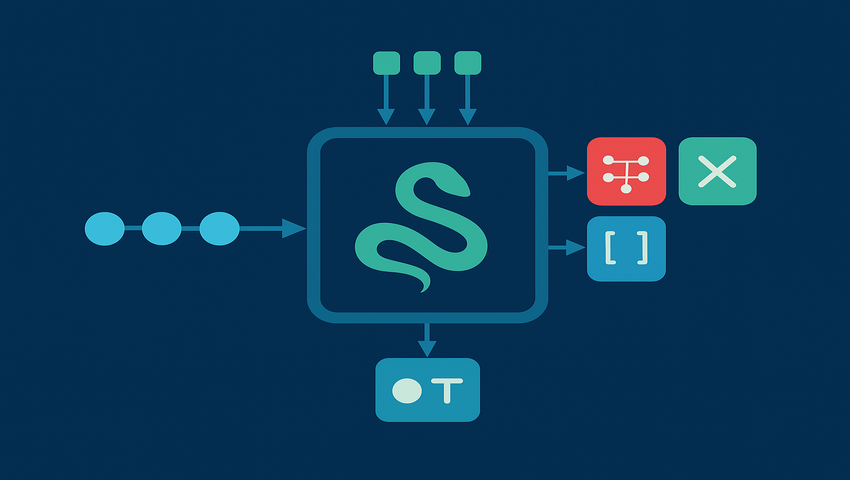
    A new chapter in AI sequence modeling has arrived with the launch of Mamba-3, an advanced neural architecture that pushes the boundaries of performance, efficiency, and capability in large language models (LLMs).

    Mamba-3 builds on a lineage of innovations that began with the original Mamba architecture in 2023. Unlike Transformers, which have dominated language modeling for nearly a decade, Mamba models are rooted in state space models (SSMs) – a class of models originally designed to predict continuous sequences in domains like control theory and signal processing.

    Transformers, while powerful, suffer from quadratic scaling in memory and compute with sequence length, creating bottlenecks in both training and inference. Mamba models, by contrast, achieve linear or constant memory usage during inference, allowing them to handle extremely long sequences efficiently. Mamba has demonstrated the ability to match or exceed similarly sized Transformers on standard LLM benchmarks while drastically reducing latency and hardware requirements.

    Mamba’s unique strength lies in its selective state space (S6) model, which provides Transformer-like selective attention capabilities. By dynamically adjusting how it prioritizes historical input, Mamba models can focus on relevant context while “forgetting” less useful information – a feat achieved via input-dependent state updates. Coupled with a hardware-aware parallel scan, these models can perform large-scale computations efficiently on GPUs, maximizing throughput without compromising quality.

    Mamba-3 introduces several breakthroughs that distinguish it from its predecessors:

    1. Trapezoidal Discretization – Enhances the expressivity of the SSM while reducing the need for short convolutions, improving quality on downstream language tasks.
    2. Complex State-Space Updates – Allows the model to track intricate state information, enabling capabilities like parity and arithmetic reasoning that previous Mamba models could not reliably perform.
    3. Multi-Input, Multi-Output (MIMO) SSM – Boosts inference efficiency by improving arithmetic intensity and hardware utilization without increasing memory demands.

    These innovations, paired with architectural refinements such as QK-normalization and head-specific biases, ensure that Mamba-3 not only delivers superior performance but also takes full advantage of modern hardware during inference.

    Extensive testing shows that Mamba-3 matches or surpasses Transformer, Mamba-2, and Gated DeltaNet models across language modeling, retrieval, and state-tracking tasks. Its SSM-centric design allows it to retain long-term context efficiently, while the selective mechanism ensures only relevant context influences output – a critical advantage in sequence modeling.

    Despite these advances, Mamba-3 does have limitations. Fixed-state architectures still lag behind attention-based models when it comes to complex retrieval tasks. Researchers anticipate hybrid architectures, combining Mamba’s efficiency with Transformer-style retrieval mechanisms, as a promising path forward.

    Mamba-3 represents more than an incremental update – it is a rethinking of how neural architectures can achieve speed, efficiency, and capability simultaneously. By leveraging the principles of structured SSMs and input-dependent state updates, Mamba-3 challenges the dominance of Transformers in autoregressive language modeling, offering a viable alternative that scales gracefully with both sequence length and hardware constraints.

    Share. Facebook Twitter Pinterest LinkedIn Tumblr Email
    InfoForTech
    • Website

    Related Posts

    Poitras Center to fuel early careers of 50 young scientists dedicated to psychiatric disorders research | MIT News

    September 22, 2026

    Why AI Adaptation, Not Adoption, Is the Real Work Ahead

    September 22, 2026

    AI in Business: Overcoming Deployment Challenges

    September 21, 2026

    A new chapter for MIT Reads | MIT News

    September 19, 2026

    AI that knows its limits

    September 18, 2026

    How OpenAI’s GPT-6 Astra Can Help You Build Presentations

    September 17, 2026
    Leave A Reply Cancel Reply

    Advertisement
    Top Posts

    A Billionaire-Backed Startup Wants to Grow ‘Organ Sacks’ to Replace Animal Testing

    March 23, 2026375 Views

    DoJ Disrupts 3 Million-Device IoT Botnets Behind Record 31.4 Tbps Global DDoS Attacks

    March 20, 202641 Views

    Mayiduo spent S$1M to produce his movie. It broke even & that’s a win in S’pore.

    March 31, 202634 Views

    How is Luckin Coffee expanding rapidly in S’pore while keeping its coffee so cheap?

    April 23, 202622 Views
    Stay In Touch
    • Facebook
    • Twitter
    • Pinterest
    • Instagram
    • YouTube
    • Vimeo
    Advertisement
    About Us
    About Us

    Our mission is to deliver clear, reliable, and up-to-date information about the technologies shaping the modern world. We focus on breaking down complex topics into easy-to-understand insights for professionals, enthusiasts, and everyday readers alike.

    We're accepting new partnerships right now.

    Facebook X (Twitter) YouTube
    Most Popular

    A Billionaire-Backed Startup Wants to Grow ‘Organ Sacks’ to Replace Animal Testing

    March 23, 2026375 Views

    DoJ Disrupts 3 Million-Device IoT Botnets Behind Record 31.4 Tbps Global DDoS Attacks

    March 20, 202641 Views

    Mayiduo spent S$1M to produce his movie. It broke even & that’s a win in S’pore.

    March 31, 202634 Views
    Categories
    • Artificial Intelligence
    • Cybersecurity
    • Innovation
    • Latest in Tech
    © 2026 All Rights Reserved InfoForTech.
    • Home
    • About Us
    • Contact Us
    • Privacy Policy

    Type above and press Enter to search. Press Esc to cancel.

    Ad Blocker Enabled!
    Ad Blocker Enabled!
    Our website is made possible by displaying online advertisements to our visitors. Please support us by disabling your Ad Blocker.