

Free tiers backed by paying subscribers are easier to evaluate than unlimited VPNs that won’t explain how they make money.
The old “if it’s free, you’re the product” line is catchy, but it’s too simple for free VPNs. Some reputable providers offer limited free plans because they hope a portion of people who try will eventually pay. Other services rely on advertising, collect more data than privacy-minded users may be comfortable with or aren’t clear about how they make money. So a free VPN can be worth using, but the price tag tells you less than the provider behind it and the tradeoffs attached to the free plan.
A virtual private network routes your internet connection through a VPN server before sending traffic on to websites and online services. The VPN app encrypts the connection between your device and that server, while sites you visit generally see the server’s public IP address rather than your normal one. That can reduce what your internet provider or Wi-Fi operator learns about the destinations you connect to. Our explanation of how a VPN works goes further into the technical side.
This setup allows you to change your virtual location with a VPN, but it doesn’t make you anonymous. Websites can still recognize you through logged-in accounts, cookies, GPS data and other identifiers. Not everyone needs a VPN running all the time, either. What matters here is that using one places a VPN company in a trusted position: you’re reducing what one part of the network (your ISP) can see by routing the connection through another.
Why free VPNs can be risky
The pros and cons of a free VPN start with a few obvious compromises, some of which are exacerbated versions of issues inherent to VPNs. Sending traffic through another server can add latency or reduce connection speeds, which is present with any VPN but might be worse on free offerings that impose speed caps. Free VPN plans may offer fewer server locations or impose data limits. Some websites, streaming services and workplace systems block VPN connections, which becomes more of an issue when you have fewer server options for free. These are limitations you must decide whether you’re willing to accept.
Privacy practices are harder to judge based on the app itself. The Federal Trade Commission has warned about this tradeoff: a VPN app gets access to internet traffic as it passes through the service, and some free apps make money through advertising or by sharing information with third parties. In other words, hiding some connection information from your ISP doesn’t help much if the VPN provider handles that information in malicious ways.
A 2026 NDSS study of Android VPN apps shows why that concern isn’t theoretical. Researchers tested 281 popular VPN apps available on the Google Play Store. They found that 29 leaked user traffic outside the VPN tunnel, 61 transmitted some unencrypted data and 76 sent Android Advertising IDs, which can be used for tracking. The study only examined Android apps, so those figures can’t be directly applied to VPNs on every platform. They do show that an app saying “connected” doesn’t guarantee the connection is being handled securely, though.
In some cases, the problem begins before there’s a VPN connection at all. There have been many cases of malware posing as free VPN tools. Having a VPN also doesn’t change whether you need antivirus or other malware protection, because these tools do different jobs. A VPN protects the connection between your device and its server. It doesn’t stop malicious software from running on your computer or keep you from entering a password on a phishing site.
How to tell if a free VPN is worth using
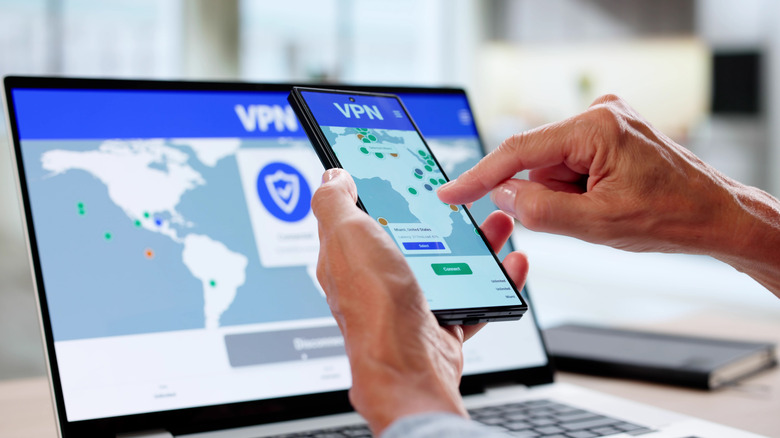
To evaluate a free VPN, start with its business model. A limited free tier attached to a paid subscription service has an obvious source of funding. The company can restrict the free plan and use it to attract customers without the free version having to generate all of its revenue. Our selection of the best free VPNs for 2026 all come from providers that also sell subscriptions. That’s a useful signal, not proof that every freemium VPN is trustworthy.
Next, check whether the provider gives you enough information to verify its claims. Its ownership should be clear, and the privacy policy should spell out what data is collected and how it’s used. A recent public security audit carries more weight than simply putting “no logs” on a product page. The Electronic Frontier Foundation’s VPN guidance similarly recommends examining data-collection practices, ownership and independent audits instead of relying on marketing claims alone.
The VPN should also explain how it secures the connection. Established protocols such as WireGuard and OpenVPN are widely used, while a provider that won’t identify its underlying technology gives you less to evaluate. Features such as a kill switch can help too: if the VPN connection drops, the kill switch blocks internet traffic instead of quietly letting it continue outside the tunnel.
Data caps, smaller server lists and paid-only feature sets are understandable compromises: you know what the free service is withholding and can decide whether you care. If a VPN promises unlimited usage while making its ownership, data practices and/or source of revenue difficult to figure out, the compromise is much harder to see. That’s the kind of “free” worth avoiding.
