

Corma.ai Ltd., a startup that develops artificial intelligence models for cybersecurity teams, has raised $125 million in funding.
NEA led the Series A round. Corma stated today that returning backers Khosla Ventures, Coatue and Sequoia Capital chipped in as well. The company is now valued at $1 billion.
Corma, which has offices in San Francisco and Tel Aviv, says competing AI models are often better at launching cyberattacks than fixing them. The company recently conducted a test in which it asked several large language models to hack a simulated corporate network. They succeeded at installing a malicious file across 85% of the test runs. In contrast, the models found only 12% of the malicious files that they themselves installed.
According to Corma, the gap between LLMs’ offensive and defensive capabilities can give hackers an edge over cybersecurity teams. That’s the issue the company is tackling with its cybersecurity-optimized AI models. Corma says that the algorithms can speed up some breach response workflows by a factor of 100 while reducing the associated costs.
The company benchmarked one of its models against the competition using an evaluation called DefenseBench V5. The test measures two metrics: how reliably a model performs defensive cybersecurity tasks and how fast it completes them. Corma says that its model outperformed GPT-6 Astra, Claude Opus 5.5 and several other cutting-edge LLMs.
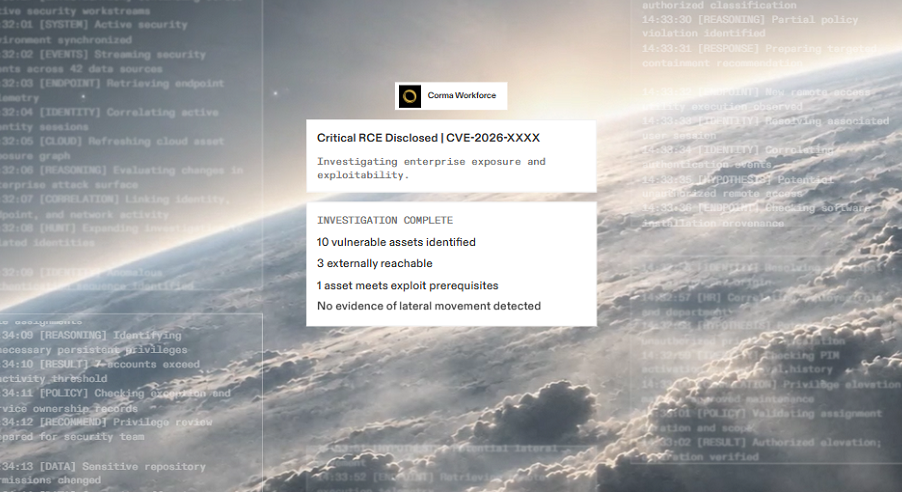
The company’s algorithms find breaches by analyzing data from other cybersecurity tools. Corma can ingest telemetry generated by firewalls, network monitoring software and a range of other applications. The company says that its models not only find threats but also generate remediation guidance for each one.
Automating breach response tasks is difficult because it requires LLMs to filter numerous false positives and duplicate alerts. Moreover, models often have access to only partial information about breaches. Many companies discard cybersecurity logs after a relatively short amount of time to reduce data storage costs.
Corma says that its algorithms can perform breach investigations on a fully autonomous basis. If human input is needed, they alert a relevant member of the cybersecurity team. It’s also possible to manually steer Corma’s models via a Slack chatbot. An administrator could, for example, ask Corma to double-check whether a recent effort to remove malware from a compromised server was successful.
“Since we came out of stealth, demand from the world’s largest organizations has been overwhelming, and one of our hardest problems has been securing capacity fast enough to keep up with the demand,” said Corma co-founder and Chief Executive Officer Alon Pluda.
Corma will use its newly raised funds to buy more infrastructure and enhance its AI models.
Image: Corma
Support our mission to keep content open and free by engaging with theCUBE community. Join theCUBE’s Alumni Trust Network, where technology leaders connect, share intelligence and create opportunities.
- 15M+ viewers of theCUBE videos, powering conversations across AI, cloud, cybersecurity and more
- 11.4k+ theCUBE alumni — Connect with more than 11,400 tech and business leaders shaping the future through a unique trusted-based network
Founded by tech visionaries John Furrier and Dave Vellante, SiliconANGLE Media has built a dynamic ecosystem of industry-leading digital media brands that reach 15+ million elite tech professionals. Our new proprietary theCUBE AI Video Cloud is breaking ground in audience interaction, leveraging theCUBEai.com neural network to help technology companies make data-driven decisions and stay at the forefront of industry conversations.
