


2023 saw a 72% increase in data breaches since 2021, which held the previous all-time record.
IBM Cost of a Data Breach Report 2024
With the rise of data breaches and hacking attempts, a strong cybersecurity posture is the most significant need today. Given the scale of cybercrime growth, you need to carefully consider several key factors that will ultimately impact the cybersecurity solution you pick.
Businesses have realized the value of their data; now they must invest in tools to easily detect and respond to security issues.
That is where Extended Detection and Response (XDR) enters the fray as a tool that empowers organizations to better protect their assets from complex cyber threats while enhancing overall operational efficiency. Before getting into this market guide for extended detection and response, let’s first dig into what is XDR.
What is Extended Detection and Response?
XDR is an all-in-one platform made to detect, investigate, and respond to threats across various vectors of security, not just endpoints but networks, servers, and cloud infrastructure as well.
Selecting the best Extended Detection and Response solution from a trusted XDR vendor is vital because it impacts your organization’s efficiency in discovering and remedying threats faster. The right platform increases visibility into threats, correlates data from various sources, and allows faster action against them—benefitting your enterprise security posture massively. By centralizing detection and response, XDR shortens the time between threat detection and remediation leading to minimal damage.
In this blog we will help you with the big questions — “What to Look for When Choosing XDR solutions?”
Here we have listed 5 key factors you must consider when evaluating XDR solutions. Whether it be full visibility into threat detection, automated responses, or scale — knowledge of what these components bring to the table will allow you to make an educated decision and narrow your selection toward a particular XDR product suited for your organization.
-
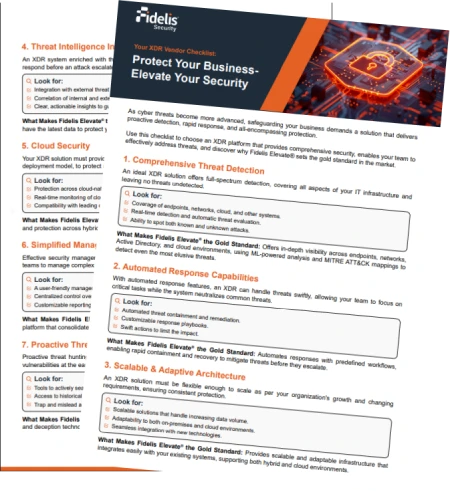
Vendor-agnostic framework to assess any XDR solution -
Everything you need to ask before committing to vendor -
Make the right XDR decision faster
Top 5 Factors to Consider When Selecting an XDR Solution
-
End-to-End Threat Detection -
Automated Security Response -
Integration Capabilities -
Scalability and Flexibility -
Centralized Management and User Experience
End-to-End Threat Detection: Covering Every Aspect
One of the standout benefits of XDR is its ability to provide comprehensive threat detection across multiple attack vectors. In today’s sophisticated IT environments, the threat landscape is evolving, and attacks are coming from all directions — endpoints, networks, cloud, and email. Traditional security tools typically tackle one thing well, be it endpoint detection or network monitoring, often overlooking the bigger picture.
This is where XDR steps in providing a unified view of threats across all possible entry points.
Organizations need this visibility across endpoints, networks, cloud environments, and email systems because sophisticated attacks today often strike at multiple organizational layers. An attacker may start with an endpoint compromise and then pivot to the network or move horizontally using cloud services. Here, without full visibility into all these verticals detecting multi-stage attacks such as this can prove difficult to identify and slow down response times leading to further losses. XDR solutions ensure zero blind spots, providing a comprehensive view that enhances threat detection accuracy.
Fidelis Elevate® provides full-spectrum protection across all vectors. It does session-level (not packet-level) inspection of network traffic over all 65,535 network ports. Additionally, because most enterprise data is not plain text-based in nature, Fidelis Elevate® moves beyond packet inspection and leverages session-level analysis. This powerful inspection capability can look deep into even complex or encrypted data streams, resulting in an increased ability to detect malicious behavior and reducing the likelihood of missed threats.
Efficient Threat Handling through Automated Security Response
In the fast-changing world of cybersecurity threats, speed is essential. The faster an organization can respond to an incident, the less damage it can cause. This is where automated response abilities in XDR systems come into the picture. Automation can quickly cover vulnerabilities, halting lateral movement, or deeper system immersion of threats, thus reducing impact.
A powerful XDR solution must have customizable workflows. Each organization has a different security landscape as well as an incident response strategy, so having the flexibility to customize automated actions is key. An organization may want to deal with an attack according to its own strategy, where one may wish to quarantine the infected endpoint immediately, and the other might just want an alert of the incident for further investigation before taking any action. By creating custom incident response workflows with the best XDR solutions, you can ensure your response work is as lean and efficient as possible yet maintain key control over the way incidents are resolved.
At Fidelis Elevate®, the “response” in XDR is as critical as detection. The platform enables customers to automatically quarantine compromised systems, freeze traffic, stop malicious processes, and disable administrator accounts across hybrid IT infrastructures so there is immediate containment without manual intervention.
Integration Capabilities
One of the most important things to look for in an XDR solution is how well it integrates with your existing defenses. Choose an XDR solution that can cover almost all your data sources for a smooth flow of information into the platform. The integration is crucial to provide the broadest threat detection and response capabilities since this enables XDR solutions to correlate data across all systems, giving you a unified view of your entire security footprint.
The best XDR solutions should be able to collect its data from endpoints, network devices, cloud services, and other enterprise security tools for the data to be analyzed and decisions to be made in real-time. The integration not only improves threat visibility but also accelerates incident response since security teams only need to look at one place for all relevant information, leading to quicker and more informed decisions. This yields a stronger security stance that can fend off current age cyber threats effectively.
Fidelis Elevate® exemplifies excellence in integration capabilities. An open XDR platform, it integrates with most 3rd-party solutions, to enhance and improve your overall security posture. With out-of-the-box integrations and a robust API for custom integration, Fidelis Elevate® delivers value while extending the advantages of your existing security investments.
Some of the common security tools that can integrated with Fidelis are:
-
Security Orchestration, Automation, and Response (SOAR) systems -
Security Information and Event Management (SIEM) platforms -
Threat Intelligence tools -
Packet Brokers -
Endpoint Detection and Response (EDR) solutions -
Security Service Edge (SSE) technologies
Scalability and Flexibility in XDR
Flexibility and scalability are key for an XDR Solution. A flexible XDR platform scales with the growth of your organization and delivers security efficacy as new endpoints, applications, and services are connected to it. Organizations caught in a cycle of manually updating rules can easily miss detecting and responding to threats, which may put them at higher risk for attacks.
With the growing adoption of multi-cloud and hybrid environments comes a stronger demand for cybersecurity solutions that can integrate easily into various platforms. For this reason, when a company evaluates an XDR, it should assess its level of integration with hybrid and cloud environments to ensure cross-cloud/hybrid compatibility.
Fidelis Elevate® stands out in its ability to offer both scalability and flexibility. It is made to scale with your organization. Fidelis Elevate® enables your security operations to scale without compromise, so you can focus on maintaining effective threat detection and response regardless of how your network evolves. This adaptability not only enhances your organization’s security posture but also maximizes the value of your existing investments in security technology.
Centralized Management and User Experience
Having a centralized management solution is indispensable. A holistic view in a single pane of glass allows security teams to monitor their entire IT environment — endpoints, networks, and clouds. Effective incident tracking and management require holistic visibility so that teams can easily discover, evaluate, and respond to threats. Instead of jumping through different platforms and dashboards, security professionals can streamline their workflows to reduce the time it takes to respond to potential incidents.
Moreover, streamlined report generation and alert management are essential as security teams can now efficiently prioritize their alerts, which a consolidated solution makes easier by delivering comprehensive reporting. This ensures that critical alerts are highlighted, and relevant data is readily available for analysis. Clear reporting also helps in compliance and auditing by putting data together into one source that can be shared with stakeholders and regulators.
This is where Fidelis Elevate® shines by offering an all-encompassing central management hub that provides holistic visibility across the entire attack surface from endpoints, networks, and cloud workloads.
Conclusion: Choosing the Best XDR Solutions for Your Organization
Selecting the right Extended Detection and Response (XDR) solution from a reputable XDR vendor is a critical decision that can significantly impact your organization’s cybersecurity posture. In this blog, we answered your questions “What to Look for When Choosing XDR?” and explored factors such as comprehensive threat detection across all vectors, automated responses, integration abilities, and the need for scalability and flexibility. All of these elements are essential to meeting the diverse needs of your organization and ensuring that your security team can respond quickly and efficiently to new threats.
Fidelis Elevate® represents a leading option in the XDR market, providing comprehensive cybersecurity coverage. With its full-spectrum protection across all vectors, immediate response features, containing threats and minimizing risks without any human intervention, seamless integration capabilities, and scalability and flexibility can help bridge any cybersecurity gaps. Before deciding which XDR platform to use, it is important to assess your individual needs and how well the XDR you choose can help fulfill them.
Our customers detect post-breach attacks over 9x Faster
- Detect Advanced Threats Before Damage Escalates Trusted
- Cybersecurity Leader for 20+ Years
- See why security teams choose us over other solutions
Frequently Asked Questions
What does an Extended Detection and Response (XDR) platform do, and what should I prioritize for a remote workforce?
An XDR platform collects and correlates security data from endpoints, networks, cloud, and email to detect and respond to threats in one system. For remote-heavy teams, prioritize endpoint visibility, cloud and SaaS monitoring, behavioral detection, and automated response capabilities to quickly contain threats across distributed environments.
What features should I prioritize when choosing an XDR solution for detection and automated response?
Focus on multi-source data correlation, strong threat detection, and fast automated response. Key features include behavioral analytics, low false positives, real-time visibility, and customizable incident response workflows that allow you to contain threats quickly without manual intervention.
What questions should I ask vendors when evaluating XDR tools?
Ask how the platform detects multi-stage attacks, what data sources it supports, and how it reduces alert fatigue. Also check integration with existing tools, level of automation in response, and whether workflows can be customized for different threat scenarios.
How do I build a business case for XDR instead of point security tools?
Highlight reduced tool sprawl, faster incident response, and improved visibility across systems. XDR also improves SOC efficiency through automation and lowers risk by unifying detection and response instead of relying on disconnected security tools.
The post 5 Must-Have Factors to Look for in an XDR Security Solution appeared first on Fidelis Security.
