

Rethink SaaS marketing case studies for 2026. Ditch miracle ROI claims, fight survivor bias, and build trust with honest, data-driven, human stories.
We have a miracle problem in software.
Walk through any SaaS website today, and you’ll see the same pattern.
A massive, bold header claiming “400% ROI in 3 Months” or “How Company X Saved $1M with One Integration.”
We label these successful SaaS marketing case studies.
In reality, most of them are victims of survivor bias.
Survivor bias is that logical error where we focus on the people or things that survived a process and inadvertently overlook those that didn’t.
Amidst the SaaS landscape, this means showcasing the one customer who had a flawless implementation while ignoring the 90% of the journey that involved messy data, internal politics, and the mud.
But by the start of 2026, the average B2B buyer developed a biological immunity to these miracle stories.
Buyers aren’t looking for a silver bullet anymore; they’re looking for a survivor’s manual. They want to know how you handled the friction.
If you want to move the needle in a saturated market, your SaaS marketing case studies need a soul transplant. You have to move away from miracle marketing and toward authority-led proof. You have to stop selling the destination and start documenting the hike.
Trust is a Deficit in Traditional SaaS Marketing Case Studies
The traditional B2B marketing engine is stalling. You can see it in the cratering CTRs and the collective eye-roll that happens every time a sponsored tag appears in a LinkedIn feed.
Decision-makers today have a sixth sense for distinguishing AI-generated noise. These people build things. They solve real, complex problems. They aren’t fooled by a 10-page PDF that reads like a legal disclaimer. This buying committee isn’t looking for a vendor because they already have dozens of options that meet their basic requirements.
What they truly want is a shortcut to achievable goals. They want to hear from someone who is fighting similar battles.
That’s where most successful SaaS marketing case studies fail: they delete the struggle.
When you remove friction from a story, you remove relatability. To build trust today, you have to borrow authority. You must turn your case studies from corporate shout-outs into practitioner workflows.
You also need to show the muddy waters.
The Anatomy of a Successful SaaS Marketing Case Study
The most effective case studies today follow the “survivor’s” logic. It all boils down to the process, not the results.
But that requires a shift in how marketers collate data. They ask the wrong questions. When they should be asking:
- Obstacles during the implementation.
- Persuading the skeptical CFO for a buy-in.
- Which features do you not need?
It’s the Job-to-be-Done framework in action.
Buyers don’t purchase software but a way to be more efficient. If your SaaS marketing case study shows a user how to change a profile picture when they’re trying to automate a week’s worth of financial reporting, you’ve lost the narrative.
Modern successful SaaS marketing case studies act as a silent concierge. They wait until the signal of intent is undeniable and then offer exactly the right map. This patience-as-a-service model builds authority by being helpfully present, not persistently annoying.
The 5 Titans: Successful SaaS Marketing Case Studies That Rewrote the Rules
To understand how to tackle survivor bias, we must spotlight the brands that leaned into nuance. These five cases didn’t just work; they defined their categories by being more human than the competition.
I. Gong
Gong didn’t just sell conversation intelligence. They sold the end of opinion-based sales.
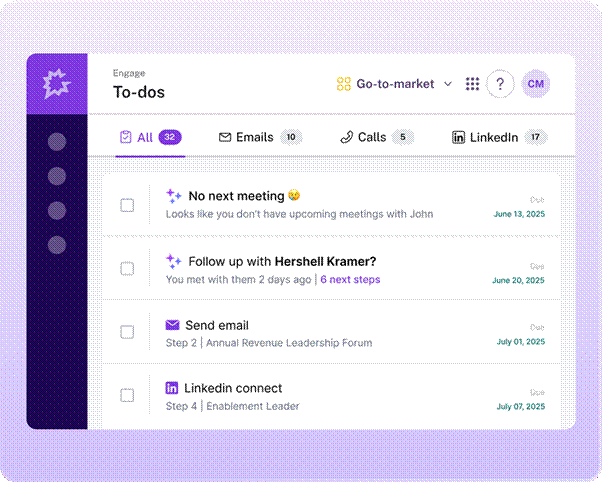
Instead of just saying Gong helps you close more deals, they published raw data on why sales calls fail. They analyzed millions of hours of talk time to prove that talking less leads to more revenue.
By doing so, they didn’t just highlight the winners. They highlighted the mistakes everyone else was making. They used their own product to create a state-of-sales report that felt like a professional diagnostic tool.
The result: Gong became the authority on how to sell, not just a tool for recording sales. They proved macro-data can build successful SaaS marketing case studies, not just micro-anecdotes.
II. Canva
Canva‘s growth is the ultimate lesson in solving a specific problem perfectly without the pro ego.
They didn’t target professional designers; they targeted the non-designers struggling with Photoshop. Their case studies focused on the Job-to-be-Done: making a professional social post in 60 seconds.
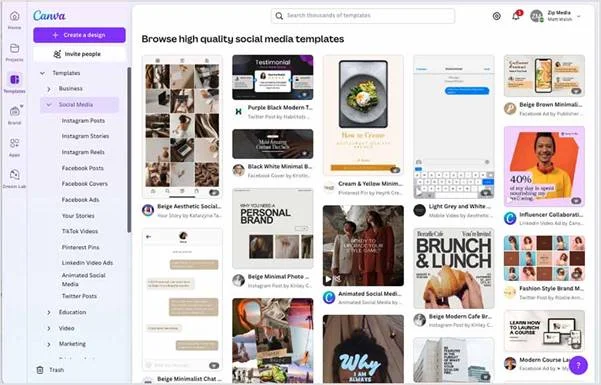
Canva leaned into the “I’m not an artist” fear. Their stories are about regular people, i.e., social media managers and small business owners, who felt empowered.
The result: By focusing on the Aha! Moment (the micro-win), they built a viral loop. Their case studies assert that anyone could survive a design task without a degree.
III. Slack
Slack didn’t just market a chat app; they marketed a reprieve from the survivor bias of corporate email chains.
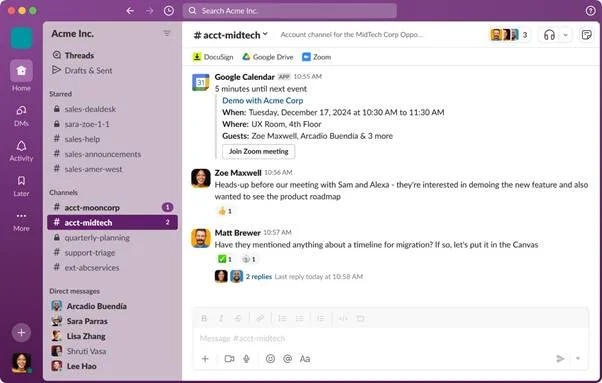
Their early case studies weren’t about communication features. They were about organizational transparency. They showed teams moving from siloed inboxes to shared channels.
These acknowledged that email was a broken, stressful system. It positioned Slack as a raft amidst unread messages.
The result: Slack achieved a word-of-mouth velocity that most brands dream of because it solved a universal human frustration. They proved that the most successful SaaS marketing case studies start with a shared enemy.
IV. HubSpot
HubSpot didn’t start by selling a CRM. They started by selling a new way to work.
They are pioneers of “inbound marketing.”
Their case studies were essentially educational masterclasses. They showed how interruption marketing was dying. They provided the tools (calculators, graders, templates) for people to see for themselves why they were failing. They didn’t just tell you they were successful; they gave you the map to survive the shift in buyer behavior.
The result: HubSpot built an ecosystem of certified experts. Their case studies worked because they sold a seat at the table for marketers who wanted to prove their worth.
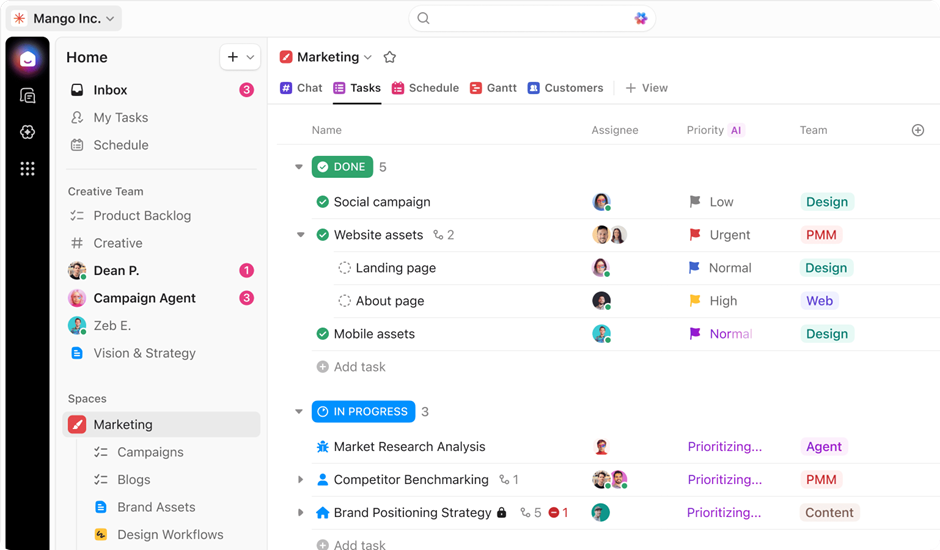
V. ClickUp
entered a crowded market by leaning into tool fatigue.
Their marketing was built on the logic: “One app to replace them all.” Their case studies focused on the nightmare of switching between five different tools just to get one project done.

ClickUp didn’t pretend that switching tools was easy. They highlighted the frustration of Platform Bloat. They showed how consolidating into ClickUp saved time by removing the friction of context-switching.
The result: They disrupted the market by being the loudest voice for the tired worker. Their successful SaaS marketing case studies resonated because they validated the user’s exhaustion.
Where Real SaaS Marketing Case Studies Actually Converge
You’re making decisions on 10% of the story if you measure the success of your case studies through downloads.
The real buying decisions happen across dark socials, i.e., private Slack groups, Discord servers, and DMs in 2026.
Here, the survivor bias is stripped away. And people are free to ask their peers: Does this tool actually work, or is the marketing just really good?
Successful SaaS marketing case studies must be decomposable to influence these conversations. You must stop thinking of case studies as mere documents and think of them as a series of signals:
- A 60-second video on a complex API integration.
- A LinkedIn carousel that breaks down a specific Micro-Win.
- A thought leader-led webinar focusing on the trade-offs.
This is the bridge between the untraceable human conversation and the revenue outcome. And by asking, “How did you actually hear about us?” and feeding those qualitative answers into your growth engine, you can deliver content that resonates with the real-world context of your buyer.
You move from being a vendor to being a topic of conversation.
Why Data Fabric is Your Narrative Strategy for Successful SaaS Marketing Case Studies
The concealed secret of many successful SaaS marketing case studies is that they are often built on stale or made-up data. You cannot build a human-centric strategy on a foundation of duplicate records and siloed information.
To achieve the level of nuance required in 2026, your marketing, sales, and product data must exist in the same fabric.
If your automated email tries to send a success story to a user who currently has an open, high-priority support ticket, you have actively damaged a human relationship. You have shown them that your automation doesn’t actually know who they are.
Technical integrity is now a GTM asset.
Authenticated domains, transparent privacy, and a unified data layer aren’t just IT tasks. They are the prerequisites for trust. Being human at scale starts with respecting the technical handshake. If your data is clean, your stories feel like a helpful suggestion. If it’s raw, they feel like a surveillance nightmare.
“Miracle” Fallacy is Dead in Successful SaaS Marketing.
In 2026, the most successful SaaS marketing case studies will be the ones that aren’t afraid to be unpolished. They will be the ones who acknowledge the 11:00 PM research sessions, the integration headaches, and the cultural friction of adopting new software.
By leaning into the reality of the work, you don’t just win a customer but a partner. You stop being a vendor and start being an essential part of their infrastructure.
Is your SaaS marketing building trust, or just adding to the digital noise?
It’s time to take the auto out of autopilot and put the purpose back into the growth. Stop trying to hack the algorithm. Start trying to help the human. That is the only way to build a brand that actually lasts.
The mud is where the truth is.
