
Close Menu

    Subscribe to Updates

    Get the latest creative news from infofortech

    What's Hot

    Today’s NYT Mini Crossword Answers for March 19

    March 19, 2026

    Apple Has Acquired MotionVFX – Ciente

    March 19, 2026

    Microsoft will no longer auto-install M365 Copilot app on Windows PCs

    March 19, 2026
    Facebook X (Twitter) Instagram
    InfoForTech
    • Home
    • Latest in Tech
    • Artificial Intelligence
    • Cybersecurity
    • Innovation
    Facebook X (Twitter) Instagram
    InfoForTech
    Home»Artificial Intelligence»Inside the AI brain: memory vs. reasoning
    Artificial Intelligence

    Inside the AI brain: memory vs. reasoning

    InfoForTechBy InfoForTechJanuary 31, 2026No Comments3 Mins Read
    Facebook Twitter Pinterest Telegram LinkedIn Tumblr WhatsApp Email
    Inside the AI brain: memory vs. reasoning
    Share
    Facebook Twitter LinkedIn Pinterest Telegram Email


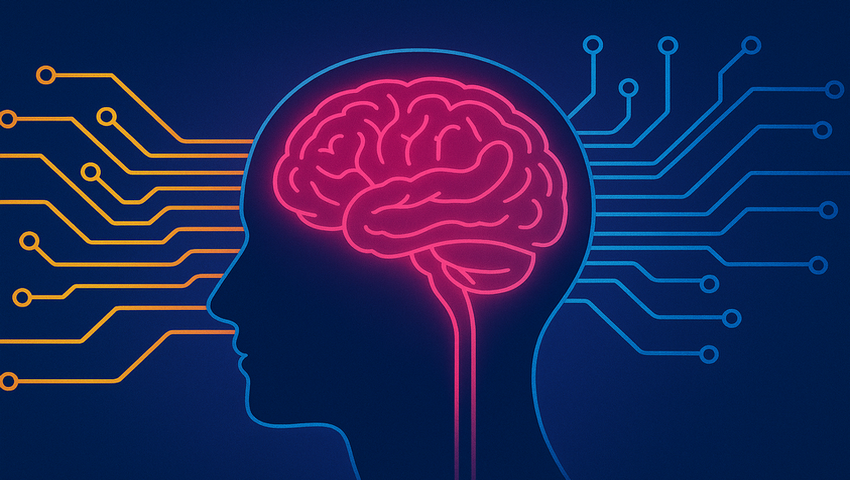
    Researchers have found clear evidence that AI language models store memory and reasoning in distinct neural pathways. The finding could lead to safer, more transparent systems that can “forget” sensitive data without losing their ability to think.

    Large language models, like those from the GPT family, rely on two core capabilities:

    1. Memorization, which allows them to recall exact facts, quotes, or training data.
    2. Reasoning, which enables them to apply general principles to solve new problems.

    Until now, scientists weren’t sure whether these two functions were deeply entangled or shared the same internal architecture. They decided to find out and discovered that the separation is surprisingly clean. It shows that rote memorization relies on narrow, specialized neural pathways, while logical reasoning and problem-solving use broader, shared components. Critically, the researchers demonstrated they could surgically remove the memorization circuits with minimal impact on the model’s ability to think.

    In experiments on the language models, millions of neural weights were ranked by a property called curvature, which measures how sensitive the model’s performance is to small changes. High curvature indicates flexible, general-purpose pathways; low curvature marks narrow, specialized ones. When the scientists removed the low-curvature components – essentially switching off the “memory circuits” – the model lost 97% of its ability to recall training data but retained nearly all of its reasoning skills.

    One of the most unexpected discoveries was that arithmetic operations share the same neural routes as memorization, not reasoning. After memory-related components were pruned, mathematical performance dropped sharply, while logical problem-solving remained almost untouched.

    This suggests that, for now, AI “remembers” math rather than computes it, similar to a student reciting times tables instead of performing calculations. The insight may explain why language models often struggle with even simple math without external tools.

    The team of researchers visualized the model’s internal “loss landscape” – a conceptual map of how wrong or right the AI’s predictions are as its internal settings change. Using a mathematical tool called K-FAC (Kronecker-Factored Approximate Curvature), they identified which regions of the network correspond to memory versus reasoning.

    Testing across multiple systems, including vision models trained on intentionally mislabeled images, confirmed the pattern: when memorization components were removed, recall dropped to as low as 3%, but reasoning tasks, such as logical deduction, common-sense inference, and science reasoning, held steady at 95-106% of baseline.

    Understanding these internal divisions could have profound implications for AI safety and governance. Models that memorize text verbatim risk leaking private information, copyrighted data, or harmful content. If engineers can selectively disable or edit memory circuits, they could build systems that preserve intelligence while erasing sensitive or biased data.

    While the current technique cannot guarantee permanent deletion, since “forgotten” data can sometimes reappear with retraining, the research represents a major step toward improved transparency in AI.

    Share. Facebook Twitter Pinterest LinkedIn Tumblr Email
    InfoForTech
    • Website

    Related Posts

    The AI Race Just Got a Lot More Secretive

    March 18, 2026

    Sustaining diplomacy amid competition in US-China relations | MIT News

    March 18, 2026

    What Is Kimi K2.5? Architecture, Benchmarks & AI Infra Guide

    March 18, 2026

    MIT-IBM Watson AI Lab seed to signal: Amplifying early-career faculty impact | MIT News

    March 18, 2026

    Fast Local LLM Inference, Hardware Choices & Tuning

    March 17, 2026

    Users, Growth, and Global Trends

    March 17, 2026
    Leave A Reply Cancel Reply

    Advertisement
    Top Posts

    We’re Tracking Streaming Price Hikes in 2026: Spotify, Paramount Plus, Crunchyroll and Others

    February 15, 202610 Views

    How a Chinese AI Firm Quietly Pulled Off a Hardware Power Move

    January 15, 20268 Views

    Microsoft is bringing an AI helper to Xbox consoles

    March 14, 20266 Views

    The World’s Heart Beats in Bytes — Why Europe Needs Better Tech Cardio

    January 15, 20266 Views
    Stay In Touch
    • Facebook
    • Twitter
    • Pinterest
    • Instagram
    • YouTube
    • Vimeo
    Advertisement
    About Us
    About Us

    Our mission is to deliver clear, reliable, and up-to-date information about the technologies shaping the modern world. We focus on breaking down complex topics into easy-to-understand insights for professionals, enthusiasts, and everyday readers alike.

    We're accepting new partnerships right now.

    Facebook X (Twitter) YouTube
    Most Popular

    We’re Tracking Streaming Price Hikes in 2026: Spotify, Paramount Plus, Crunchyroll and Others

    February 15, 202610 Views

    How a Chinese AI Firm Quietly Pulled Off a Hardware Power Move

    January 15, 20268 Views

    Microsoft is bringing an AI helper to Xbox consoles

    March 14, 20266 Views
    Categories
    • Artificial Intelligence
    • Cybersecurity
    • Innovation
    • Latest in Tech
    © 2026 All Rights Reserved InfoForTech.
    • Home
    • About Us
    • Contact Us
    • Privacy Policy

    Type above and press Enter to search. Press Esc to cancel.

    Ad Blocker Enabled!
    Ad Blocker Enabled!
    Our website is made possible by displaying online advertisements to our visitors. Please support us by disabling your Ad Blocker.