

As cyber threats get trickier—with ransomware attacks happening every 11 seconds, and each attack costing between $350,000 and $1.4 million on average—businesses want to beef up their defenses without spending too much. More companies are using Extended Detection and Response (XDR) to simplify their security work and cut costs.
XDR provides an answer that can help businesses do more with less tackling common problems like too many tools complex security setups, and high running costs. This blog will look at XDR cost saving and how it affects your cybersecurity budget, and why it’s becoming a must-have for companies aiming to get the most out of their security operations.
A Quick Glance at The Economic Impact of XDR
The economic benefits of XDR security are far-reaching, especially when it comes to the total cost of security operations. Cybersecurity is expensive, and the operational costs associated with traditional tools can quickly spiral out of control. As ransomware becomes more prevalent, businesses face the dual challenge of securing their networks while maintaining their bottom line. XDR addresses this by offering several key benefits:
-
Cost Reduction
According to a CSO Online study, 50% of security leaders report that they don’t fully utilize the features of their security technologies. This inefficiency often leads to higher costs and underperformance in existing systems. By consolidating multiple security solutions into a single platform, XDR reduces the need for tool sprawl and shelfware, ensuring organizations can make the most of their existing investments.
-
Efficiency Gains
ESG’s research reveals that XDR can replace up to 8 full-time employees (FTEs) by automating data analysis, correlation, and incident response tasks, providing significant operational savings. Thereby significantly lowering the cost of manual efforts and reducing the burden on security teams. These efficiency gains directly translate into cost savings across the board.
-
Security Effectiveness
According to an ESG report, 57% of organizations using SIEM tools struggle with operational challenges, such as high costs and the overwhelming influx of data points. Many are now seeking solutions like XDR to overcome these hurdles. XDR not only reduces the total cost of security but also increases security effectiveness.
By correlating telemetry from across all components of your IT environment—whether on-premises, in the cloud, or hybrid—XDR provides a unified security view, thereby improving overall security posture and reducing the long-term costs of data breach.
3 Challenges and Considerations for Budgeting
While the XDR benefits are clear, budgeting for XDR implementation requires careful consideration. XDR and cybersecurity budgets include several crucial factors to keep in mind that can profoundly impact the cost-effectiveness of your security operations. Let’s break these down into actionable insights.
1. Personnel Costs
Hiring cybersecurity talent is expensive, with entry-level analysts earning $80K–$125K annually. Many organizations need multiple analysts for full coverage. XDR changes the game by automating repetitive tasks, enabling your existing team to focus on critical issues. This reduces the need for additional hires, cutting personnel expenses while maintaining strong security.
-
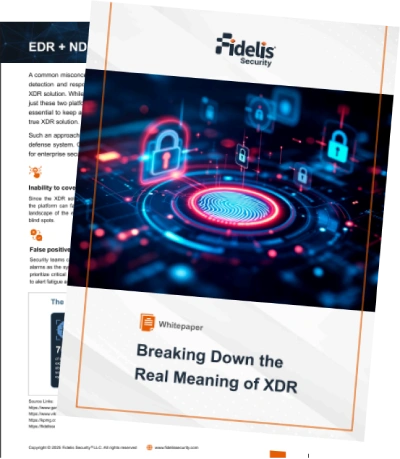
Not All XDRs Are Created Equally -
EDR + NDR ≠ XDR -
Choose a real solution
2. Tool Sprawl
A CSO Online survey found only a third of organizations using the public cloud have unified security service, leading to inefficiencies and higher costs. XDR consolidates security tools into a single, integrated platform, simplifying operations, reducing licensing and maintenance costs, and improving response times. It offers a clear, unified view of your security environment.
3. Storage and Analytics Costs
Growing telemetry data inflates cloud storage and processing expenses. XDR optimizes analytics by focusing on relevant data, reducing storage needs, and cutting cloud infrastructure costs. This smarter approach ensures your cybersecurity investments are both effective and efficient. According to ESG, organizations using XDR significantly reduce the likelihood of attack repropagation, which minimizes costs associated with incident recovery.
Three Areas of Value XDR Delivers
According to ESG research, over 90% of organizations are actively exploring XDR solutions as either a supplement to or a replacement for their existing SIEM tools. This growing interest underscores the limitations of traditional SIEM solutions—such as high operational costs and complexity—and highlights the demand for more integrated, automated, and effective security technologies.
ESG identifies three key areas where XDR delivers measurable value to organizations:
1. Security Effectiveness
XDR significantly enhances security posture by providing a comprehensive view of threats across the entire network and endpoints. By unifying telemetry analysis, XDR improves threat detection and response times, leading to fewer successful attacks.
2. Business Enablement
XDR helps eliminate the silos of data that often slow down security operations, enabling organizations to quickly analyze and investigate attacks. This streamlining of processes reduces the overhead associated with managing and ingesting data.
3. Cost Reduction
By consolidating vendors and products, XDR reduces costs associated with maintaining multiple security tools. Fewer successful attacks and more efficient incident response processes also mean less time and money spent on remediation.
How Does XDR Lower the Cost of Security Operations?
One of the most important benefits of XDR is that it reduces the overall cost of security operations:
-
Seamless Integration: An open-architecture XDR solution works with your existing tool stack—whether on premises, in the cloud, or across hybrid environments. That way, you can make the most of your investments while avoiding costly replacement. -
Tool and Vendor Consolidation: XDR eliminates all the redundant security tools, reducing vendor management costs as well as the complexity of separate systems. Organizations are thus saved in terms of licensing, support, and training costs. -
Improved Security Team Productivity: XDR frees security professionals from manual efforts in detection, investigation, and response processes, thus reducing the effort made by security teams in manual tasks, thereby increasing productivity and allowing them to focus on more strategic and other proactive security measures.
Factors to Consider When Maximizing XDR ROI
The economic impact of XDR extends well beyond initial cost savings. To maximize XDR ROI, organizations must consider several factors when implementing and maintaining their XDR solution:
-
1. Security Team Efficiency
XDR has a significant impact on boosting security teams’ effectiveness. It automates detection and response processes giving security professionals more time to concentrate on strategic tasks like threat hunting and incident response. This cut in manual work leads to cost savings and enhances team productivity.
-
2. Reduced Support and Storage Costs
An XDR platform needs less constant adjusting and management, which often cause headaches with traditional solutions such as SIEM. Also, XDR can cut cloud storage and analytics costs by combining and linking data, making threat detection and response smoother. Since storage and analytics costs make up a big part of a company’s security budget, these savings can be substantial.
-
3. Comprehensive Protection Across Environments
XDR offers protection that covers the whole organization—from endpoints to the cloud. By connecting with key IT and security systems, XDR provides a thorough defense system addressing weak points in traditional security setups and allowing for more efficient use of resources.
The Future of XDR and its Impact on Cybersecurity Budgets
In companies already using XDR, 60% of those surveyed said XDR has a significant impact on lowering the chances of attacks spreading again. This number highlights XDR’s benefitsto not just stop current attacks but also to keep them from coming back giving a long-term answer to the always-changing threat scene.
Looking forward, XDR’s effect on the economy will keep growing, with several key XDR strategies that companies are focusing on more and more:
-
Complete Threat Spotting and Action: XDR brings together data from endpoints, networks, and the cloud to give a full real-time picture of threats cutting down on manual work and making threat detection more accurate. -
Saving Money through Automation: By making routine tasks automatic, XDR cuts down on running costs helping companies spend less on staff and too many tools while making their security work better. -
Security That Grows: As cyber threats change, XDR solutions offer flexibility letting companies grow their security setup while still keeping strong protection against advanced attacks like ransomware.
How to Get the Most Out of Your XDR Investment?
Implementing Extended Detection and Response (XDR) brings operational and financial benefits. Here’s how XDR, with Fidelis Elevate XDR, maximizes these advantages for a cost-efficient, highly effective security solution.
Force-Multiply Your Security Team
XDR enhances security operations by:
-
Freeing Up Analysts: Automating security alert triage and correlation to provide a single attack story, reducing manual workload. -
Streamlining Response: Enabling quick, automated, or one-click guided responses for faster mitigation. -
Reducing Alert Fatigue: Consolidating alerts ensures more time for threat mitigation and less for managing false positives.
Fidelis Elevate XDR integrates seamlessly, enhancing team productivity and optimizing resources.
Address Tool Sprawl and Eliminate Shelfware
XDR addresses tool sprawl by:
-
Unified Integration: Works across on-premises, cloud, and hybrid environments to aggregate telemetry into one detection. -
Enhanced Visibility: Reduces redundant alerts, simplifying operations and boosting security posture.
Fidelis Elevate XDR offers a unified solution, simplifying management while improving security across platforms.
Optimize Storage and Analytics Costs
XDR helps manage storage and analytics costs by:
-
Lowering Cloud Costs: Efficiently processes and stores telemetry to reduce storage expenses. -
Upskilling Analysts: Provides threat-hunting capabilities to focus on advanced threats.
Fidelis Elevate XDR combines cost-effective storage with cutting-edge analytics to improve operational efficiency.
Protection Beyond the Endpoint
XDR extends protection across the entire IT environment by:
-
Comprehensive Network Coverage: Integrates data from endpoints, identity management, cloud, and more for full visibility. -
Contextualized Correlations: ML driven analysis provides contextual insights to eliminate detection blind spots.
Fidelis Elevate XDR ensures unified prevention and response from endpoints to cloud environments.
Our customers detect post-breach attacks over 9x Faster
- Detect Advanced Threats Before Damage Escalates Trusted
- Cybersecurity Leader for 20+ Years
- See why security teams choose us over other solutions
Frequently Ask Questions
How do I estimate budget and total cost of ownership for extended detection and response, including licenses, deployment, and ongoing monitoring for a company with a few hundred employees?
XDR TCO includes licensing (per user or endpoint), deployment and integration costs, ongoing monitoring or SOC effort, and cloud storage/analytics. The best estimate comes from comparing current security spend (SIEM, EDR, tools, staffing) with a consolidated XDR model to identify savings.
What are some practical steps to roll out extended detection and response in phases so we can start small, prove value, and then expand across endpoints, cloud, and identity systems?
Start with endpoints for quick visibility. Then expand to network, cloud, and identity sources. Next, enable automation and response playbooks. Finally, optimize detections and remove redundant tools to improve efficiency and ROI.
How does XDR actually reduce cybersecurity costs compared to traditional security tools?
XDR reduces costs by consolidating multiple tools into a single platform, lowering licensing and maintenance overhead. It also reduces analyst workload through automation and improves detection efficiency, which minimizes breach-related expenses and response time.
What types of organizations benefit most from investing in XDR?
XDR is most valuable for organizations with complex or hybrid environments, limited security staff, or high alert volumes. Mid-sized and enterprise companies benefit most due to reduced tool sprawl, improved visibility across environments, and lower operational burden on SOC teams.
The post The Economics of XDR: Reducing Costs and Enhancing Efficiency appeared first on Fidelis Security.
