
Close Menu

    Subscribe to Updates

    Get the latest creative news from infofortech

    What's Hot

    File Your Taxes With TurboTax Full Service Now Before Prices Go Up

    March 17, 2026

    Death by Tariffs: Volvo Discontinuing Entry-Level EX30 EV in the US

    March 16, 2026

    Nvidia launches NemoClaw, Agent Toolkit to enhance AI agents

    March 16, 2026
    Facebook X (Twitter) Instagram
    InfoForTech
    • Home
    • Latest in Tech
    • Artificial Intelligence
    • Cybersecurity
    • Innovation
    Facebook X (Twitter) Instagram
    InfoForTech
    Home»Innovation»OpenAI introduces Codex Security to help developers fix software vulnerabilities
    Innovation

    OpenAI introduces Codex Security to help developers fix software vulnerabilities

    InfoForTechBy InfoForTechMarch 9, 2026No Comments4 Mins Read
    Facebook Twitter Pinterest Telegram LinkedIn Tumblr WhatsApp Email
    OpenAI introduces Codex Security to help developers fix software vulnerabilities
    Share
    Facebook Twitter LinkedIn Pinterest Telegram Email


    OpenAI Group PBC today debuted Codex Security, a new tool in its Codex programming assistant that can help developers find and fix code vulnerabilities.

    The launch comes two weeks after Anthropic PBC introduced a competing product. Claude Code Security can analyze an application’s code base, identify vulnerabilities and suggest fixes. Codex Security works in a similar manner.

    Developers can activate OpenAI’s new tool by giving it access to the code repository they wish to scan. According to the ChatGPT developer, Codex Security creates a temporary copy of the repository in an isolated container. It then studies the code files in a process that can take up to several days.

    Codex Security’s analysis produces a document that OpenAI calls a threat model. It’s a lengthy natural language description of how a program works and where it may be vulnerable. An application’s threat model includes, among other details, information on interface elements that enable end-users to upload data. Such modules are particularly susceptible to cyberattacks.

    Developers can customize the threat model if necessary. A user could, for example, add in more details about a particularly sensitive application component that Codex Security should prioritize. The tool uses the threat model to guide its vulnerability scans.

    The model tests the flaws that it finds in a sandbox to determine whether they can be exploited by hackers. After filtering false positives, the tool ranks vulnerabilities based on their severity. For added measure, it saves logs about the flaws that didn’t pass the sandbox test. Developers can use those logs to search for vulnerabilities that may have been accidentally tagged as false positives.

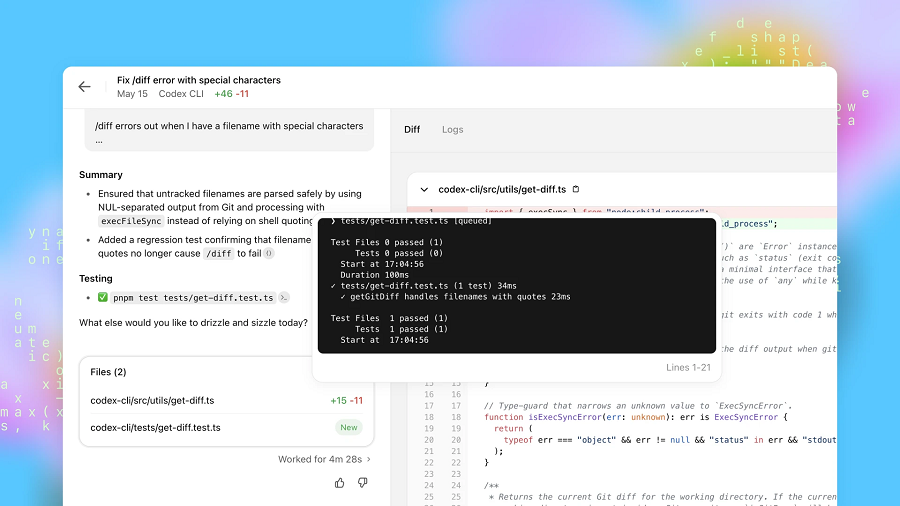
    Codex Security generates a remediation suggestion for each exploit that it finds. The recommendation comprises the code necessary to fix the issue and a natural language explanation. After reviewing the suggested code, developers can push it to production by clicking a button.

    The new model started out as an internal tool called Aardvark that OpenAI used to analyze its own code files. Last year, the company launched a beta program that made the tool available to a limited number of customers. OpenAI says that the beta program helped it cut Code Security’s false positives by more than 50%.

    The tool helped early adopters detect more than 11,000 critical and high-severity vulnerabilities. Additionally, OpenAI used it to scan a number of popular open-source tools that power its workloads. The company found 14 vulnerabilities that were severe enough to be included in the CVE database.

    Codex Security is available as a research preview in the Enterprise, Business and Edu tiers of ChatGPT. Additionally, OpenAI has launched a program that will enable open-source project maintainers to access the tool at no charge.

    Image: OpenAI

    Support our mission to keep content open and free by engaging with theCUBE community. Join theCUBE’s Alumni Trust Network, where technology leaders connect, share intelligence and create opportunities.

    • 15M+ viewers of theCUBE videos, powering conversations across AI, cloud, cybersecurity and more
    • 11.4k+ theCUBE alumni — Connect with more than 11,400 tech and business leaders shaping the future through a unique trusted-based network.

    About SiliconANGLE Media

    SiliconANGLE Media is a recognized leader in digital media innovation, uniting breakthrough technology, strategic insights and real-time audience engagement. As the parent company of SiliconANGLE, theCUBE Network, theCUBE Research, CUBE365, theCUBE AI and theCUBE SuperStudios — with flagship locations in Silicon Valley and the New York Stock Exchange — SiliconANGLE Media operates at the intersection of media, technology and AI.

    Founded by tech visionaries John Furrier and Dave Vellante, SiliconANGLE Media has built a dynamic ecosystem of industry-leading digital media brands that reach 15+ million elite tech professionals. Our new proprietary theCUBE AI Video Cloud is breaking ground in audience interaction, leveraging theCUBEai.com neural network to help technology companies make data-driven decisions and stay at the forefront of industry conversations.

    Share. Facebook Twitter Pinterest LinkedIn Tumblr Email
    InfoForTech
    • Website

    Related Posts

    File Your Taxes With TurboTax Full Service Now Before Prices Go Up

    March 17, 2026

    Nvidia launches NemoClaw, Agent Toolkit to enhance AI agents

    March 16, 2026

    EU’s Patience Is Running Out, Expects Google To Pay Up Instantly

    March 16, 2026

    Samsung is reportedly pausing Galaxy Z TriFold sales, and it may soon become even harder to find

    March 16, 2026

    These 15 Amazon Spring Sale Tech Deals Are Actually Good. WWe Checked the Price History (2026)

    March 16, 2026

    Report: Meta could lay off 20% of its staff and replace many of them with AI workers

    March 16, 2026
    Leave A Reply Cancel Reply

    Advertisement
    Top Posts

    How a Chinese AI Firm Quietly Pulled Off a Hardware Power Move

    January 15, 20268 Views

    The World’s Heart Beats in Bytes — Why Europe Needs Better Tech Cardio

    January 15, 20265 Views

    HHS Is Using AI Tools From Palantir to Target ‘DEI’ and ‘Gender Ideology’ in Grants

    February 2, 20264 Views

    Rising Digital Financial Fraud in South Africa

    January 15, 20264 Views
    Stay In Touch
    • Facebook
    • Twitter
    • Pinterest
    • Instagram
    • YouTube
    • Vimeo
    Advertisement
    About Us
    About Us

    Our mission is to deliver clear, reliable, and up-to-date information about the technologies shaping the modern world. We focus on breaking down complex topics into easy-to-understand insights for professionals, enthusiasts, and everyday readers alike.

    We're accepting new partnerships right now.

    Facebook X (Twitter) YouTube
    Most Popular

    How a Chinese AI Firm Quietly Pulled Off a Hardware Power Move

    January 15, 20268 Views

    The World’s Heart Beats in Bytes — Why Europe Needs Better Tech Cardio

    January 15, 20265 Views

    HHS Is Using AI Tools From Palantir to Target ‘DEI’ and ‘Gender Ideology’ in Grants

    February 2, 20264 Views
    Categories
    • Artificial Intelligence
    • Cybersecurity
    • Innovation
    • Latest in Tech
    © 2026 All Rights Reserved InfoForTech.
    • Home
    • About Us
    • Contact Us
    • Privacy Policy

    Type above and press Enter to search. Press Esc to cancel.

    Ad Blocker Enabled!
    Ad Blocker Enabled!
    Our website is made possible by displaying online advertisements to our visitors. Please support us by disabling your Ad Blocker.