
Close Menu

    Subscribe to Updates

    Get the latest creative news from infofortech

    What's Hot

    Trevor Noah on AI

    November 8, 2026

    I Used NYT Cooking’s New AI-Powered Recipe Modifier, and It’s Actually Pretty Good

    November 8, 2026

    What are Democrats doing about AI and data centers?

    November 8, 2026
    Facebook X (Twitter) Instagram
    InfoForTech
    • Home
    • Latest in Tech
    • Artificial Intelligence
    • Cybersecurity
    • Innovation
    Facebook X (Twitter) Instagram
    InfoForTech
    Home»Innovation»Microsoft reveals cutting-edge MAI-Base-2 model with 2T parameters
    Innovation

    Microsoft reveals cutting-edge MAI-Base-2 model with 2T parameters

    InfoForTechBy InfoForTechOctober 17, 2026No Comments4 Mins Read
    Facebook Twitter Pinterest Telegram LinkedIn Tumblr WhatsApp Email
    Microsoft reveals cutting-edge MAI-Base-2 model with 2T parameters
    Share
    Facebook Twitter LinkedIn Pinterest Telegram Email


    Microsoft Corp. has developed a new large language model that it says is significantly more efficient than leading open-source alternatives. 

    The company’s artificial intelligence research group detailed the algorithm on Thursday.

    MAI-Base-2 is not a full-fledged LLM but rather a base model, a kind of no-frills prototype. Developers turn base models into LLMs by putting them through several additional rounds of training. That extra training usually focuses on adding reasoning features and safety guardrails.

    The most capable open-source base model on the market today is DeepSeek-V4-Pro-Base. Microsoft says that MAI-Base-2 outperformed it on a series of internal benchmarks that contained science, programming and math questions. Furthermore, MAI-Base-2 is up to 12 times more hardware-efficient by certain measures. 

    MAI-Base-2 features a mixture of experts, or MoE, architecture, which means that it only uses a subset of its artificial neurons to process prompts. That’s more efficient than activating the entire neural network. MAI-Base-2 has 2 trillion parameters and activates 80 billion of them when it receives a prompt.

    A language model’s artificial neurons are organized into clusters called layers. Microsoft’s previous-generation base model mixed MoE layers with modules based on a less efficient design called FFN. MAI-Base-2 is made up entirely of MoE layers, which is one of the contributors to its performance.

    Microsoft trained the model for 38 days using 16,000 of Nvidia Corp.’s GB200 chips. The training dataset used in the project comprised 50 trillion tokens. About a fifth of the tokens were used to train a computer vision module integrated into MAI-Base-2. The module makes the model better than its predecessor at tasks such as understanding scientific charts. 

    Developers train LLMs by observing the manner in which they complete tasks and providing feedback on how they can improve. That feedback, which is generated algorithmically, takes the form of a mathematical object called a gradient. The gradient travels through the layers of the model being trained and re-calibrates each one to boost its output quality.

    Gradients change every time they pass through an LLM layer. Under certain circumstances, those changes cause bugs that can disrupt the training workflow. Microsoft employed a method called gradient clipping to prevent that issue from affecting MAI-Base-2. It also used Muon, a popular open-source AI tool, to speed up the training workflow.

    Microsoft will license MAI-Base-2’s weights to “trusted partners” through its Azure cloud platform. Additionally, it will use the model to power a new series of LLMs. The company plans to share more information about those models in the near future.

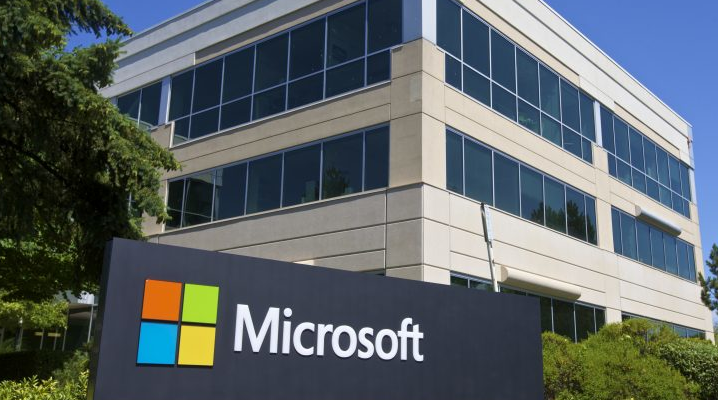
    Photo: Microsoft

    Support our mission to keep content open and free by engaging with theCUBE community. Join theCUBE’s Alumni Trust Network, where technology leaders connect, share intelligence and create opportunities.

    • 15M+ viewers of theCUBE videos, powering conversations across AI, cloud, cybersecurity and more
    • 11.4k+ theCUBE alumni — Connect with more than 11,400 tech and business leaders shaping the future through a unique trusted-based network
    SiliconANGLE Media is a recognized leader in digital media innovation, uniting breakthrough technology, strategic insights and real-time audience engagement. As the parent company of SiliconANGLE, theCUBE Network, theCUBE Research, CUBE365, theCUBE AI and theCUBE SuperStudios — with flagship locations in Silicon Valley and the New York Stock Exchange — SiliconANGLE Media operates at the intersection of media, technology and AI.

    Founded by tech visionaries John Furrier and Dave Vellante, SiliconANGLE Media has built a dynamic ecosystem of industry-leading digital media brands that reach 15+ million elite tech professionals. Our new proprietary theCUBE AI Video Cloud is breaking ground in audience interaction, leveraging theCUBEai.com neural network to help technology companies make data-driven decisions and stay at the forefront of industry conversations.

    Share. Facebook Twitter Pinterest LinkedIn Tumblr Email
    InfoForTech
    • Website

    Related Posts

    I Used NYT Cooking’s New AI-Powered Recipe Modifier, and It’s Actually Pretty Good

    November 8, 2026

    Thinking Machines debuts Inkling 2 Small amid reported $5B fundraising push

    November 8, 2026

    The NYT Buying Letterboxd For $330M Is Pure Genius: A Genius Move For Legacy Media

    November 8, 2026

    BYD’s new Rolls-Royce-inspired EV can float, turn like a tank, and costs over $300,000

    November 8, 2026

    The 10 Best Early Black Friday Headphone Deals (2026)

    November 7, 2026

    OpenAI reportedly raises $11B in new funding at $1.25T valuation

    November 7, 2026
    Leave A Reply Cancel Reply

    Advertisement
    Top Posts

    A Billionaire-Backed Startup Wants to Grow ‘Organ Sacks’ to Replace Animal Testing

    March 23, 2026551 Views

    Mayiduo spent S$1M to produce his movie. It broke even & that’s a win in S’pore.

    March 31, 202644 Views

    DoJ Disrupts 3 Million-Device IoT Botnets Behind Record 31.4 Tbps Global DDoS Attacks

    March 20, 202643 Views

    Here’s who got richer in 2026—and who lost billions

    September 5, 202635 Views
    Stay In Touch
    • Facebook
    • Twitter
    • Pinterest
    • Instagram
    • YouTube
    • Vimeo
    Advertisement
    About Us
    About Us

    Our mission is to deliver clear, reliable, and up-to-date information about the technologies shaping the modern world. We focus on breaking down complex topics into easy-to-understand insights for professionals, enthusiasts, and everyday readers alike.

    We're accepting new partnerships right now.

    Facebook X (Twitter) YouTube
    Most Popular

    A Billionaire-Backed Startup Wants to Grow ‘Organ Sacks’ to Replace Animal Testing

    March 23, 2026551 Views

    Mayiduo spent S$1M to produce his movie. It broke even & that’s a win in S’pore.

    March 31, 202644 Views

    DoJ Disrupts 3 Million-Device IoT Botnets Behind Record 31.4 Tbps Global DDoS Attacks

    March 20, 202643 Views
    Categories
    • Artificial Intelligence
    • Cybersecurity
    • Innovation
    • Latest in Tech
    © 2026 All Rights Reserved InfoForTech.
    • Home
    • About Us
    • Contact Us
    • Privacy Policy

    Type above and press Enter to search. Press Esc to cancel.

    Ad Blocker Enabled!
    Ad Blocker Enabled!
    Our website is made possible by displaying online advertisements to our visitors. Please support us by disabling your Ad Blocker.