

The next big test for AI isn’t happening in a data center. It’s happening in the dirt.
Really, it’s in the weeds.
Two Seattle-area startups are betting that AI can transform how farmers find and eliminate unwanted plants — one by mapping every weed, the other by zapping them with lasers.
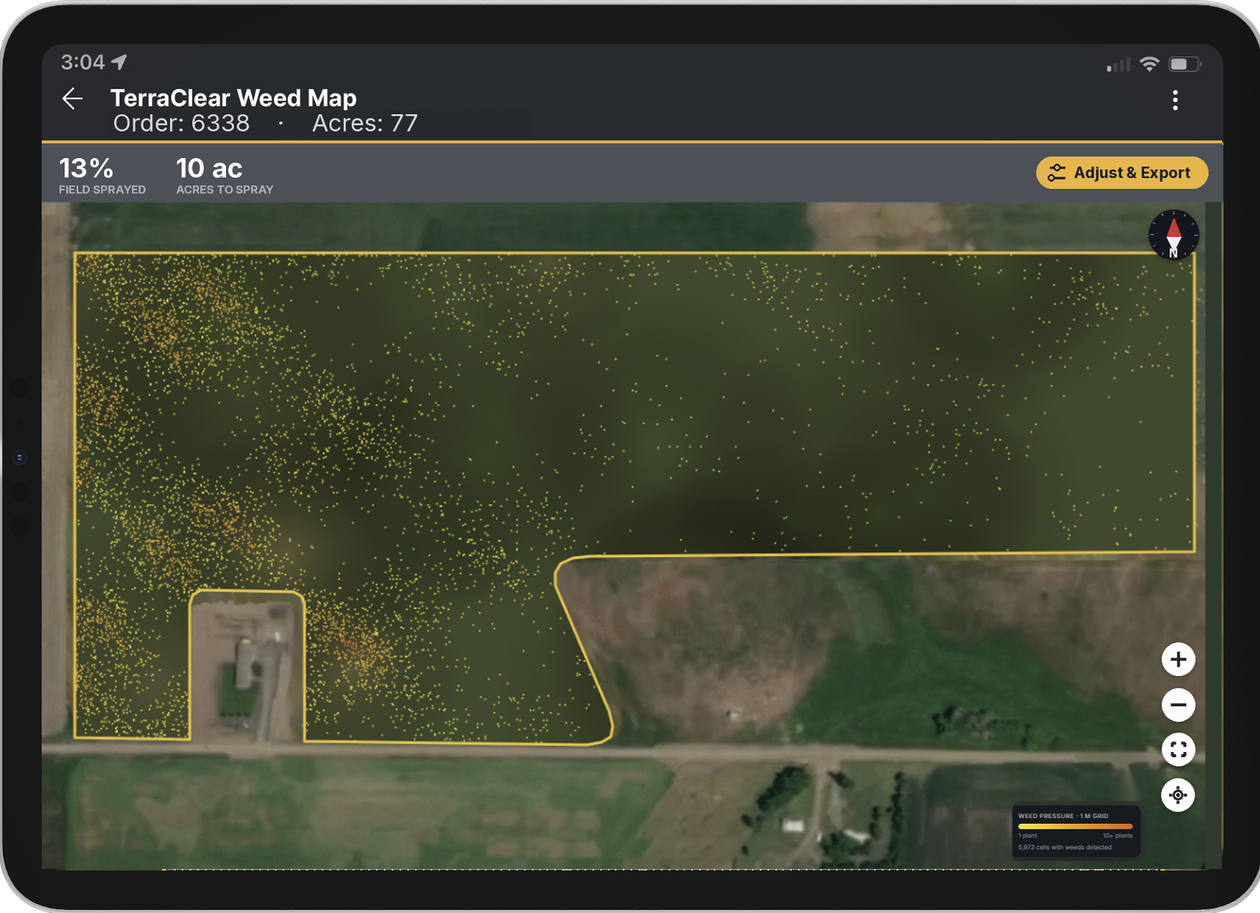
Issaquah, Wash.-based TerraClear is commercializing a new system that uses ultra-high-resolution imagery and machine learning to map individual weeds across entire fields of corn and soybeans, then turns those detections into digital prescriptions that can be sent directly to precision sprayers.
The new Weed Maps technology from TerraClear — best known for its robotic rock picking technology — can identify weeds as small as a quarter of an inch, the company said in a press release today.
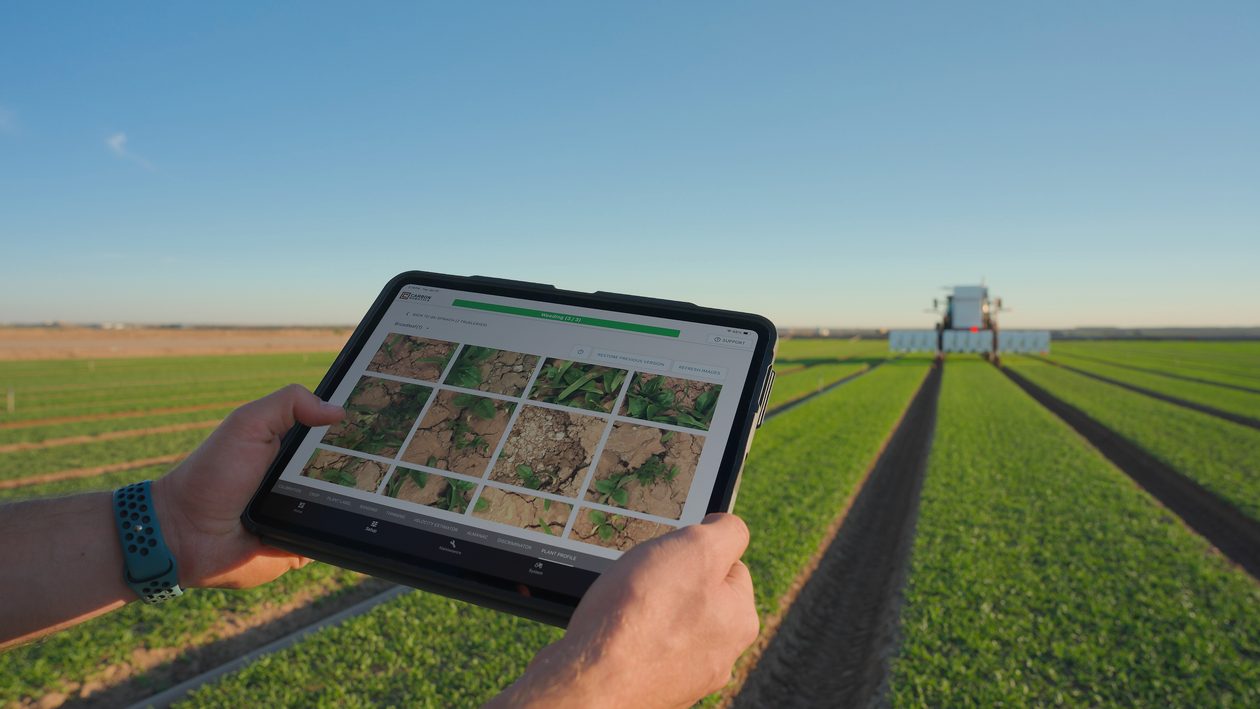
Meanwhile, Seattle-based Carbon Robotics is taking a different approach: Its autonomous LaserWeeder uses computer vision to identify weeds and then blasts them with lasers.
Now, the AI powering these systems is getting smarter, too — moving beyond simple weed detection toward models that can recognize and understand plants across different crops, fields and growing conditions.
TerraClear’s new Weed Maps, announced Tuesday, captures imagery at 1.5-millimeter resolution and identifies weeds as small as the eraser on a pencil. Rather than sampling portions of a field, the company says it collects images of every acre and produces a geo-referenced map that can be uploaded to section or nozzle-controlled sprayers used by farmers.
The goal is precision at a level that would be difficult for a human to achieve, allowing a farmer to know where the individual weeds are.
TerraClear says the maps can be delivered the next day, giving growers a chance to act while weeds are still small and easier to control.
Devin Lammers, the chief executive of TerraClear, tells GeekWire that its approach “sidesteps the capital problem entirely.” In other words, farmers need not buy a new piece of expensive equipment, instead using software to turn existing sprayers into precision instruments by telling them exactly where to spray.
He called Carbon Robotics laser-weeding system “impressive technology,” noting that it works well for speciality crops and organics.
But bigger farms producing commodity crops like corn and soybeans — the market TerraClear is going after — need a different approach, he said.
“Modern grain and oilseed sprayers already have individual nozzle control and RTK positioning — the actuation hardware is sitting in the shed,” Lammers said via email. “We just hand the sprayer a shapefile of individual weed locations and it turns the nozzle on only where a weed actually is.”
Given that large corn and soybean growers farm more acres at a lower revenue per acre, Lammers said it’s a “very different P&L” where expensive new equipment needs to pencil out.
With TerraClear’s new system, Lammers added that “the farmer buys a map, not a machine.”
RFK Jr. and new ways to farm
One of the benefits of both approaches is chemical use reduction in the field, a hot topic in political circles with President Trump earlier this year committing $1 billion to modernize farming and reduce chemicals in agriculture. That federal investment could help spark new innovations, like the ones TerraClear and Carbon Robotics are developing.
@media (max-width: 600px) {
aside.callout { float:none !important; max-width:100% !important; margin-left:0 !important; margin-right:0 !important; }
aside.callout .callout-img { display:none !important; }
}
Robert F. Kennedy Jr., the U.S. secretary of health and human services, earlier this year touted Carbon Robotics’s machines on an episode of The Joe Rogan Experience as a possible solution in cutting pesticide use.
In the case of TerraClear, Lammers said the precision mapping technology alone could cut pesticide and herbicide use by up to 80% with no loss of efficacy.
Both startups are part of a broader Pacific Northwest ag-tech ecosystem that has been applying AI and robotics to agriculture, building on the regions farming and tech roots.
TerraClear founder Brent Frei represents that unique farming and tech DNA. He grew up on a family farm in Grangeville, Idaho, before studying at Dartmouth and then moving to the Seattle area where he co-founded Onyx Software and Smartsheet.
Founded in 2017, TerraClear originally attacked a much less glamorous agricultural problem: identifying and removing rocks from farmers’ fields. In 2024, the company raised $15 million, bringing its total funding to $53 million.
By February of this year, TerraClear had expanded to about 50 employees and was approaching 1,000 customers. At that time, it also launched an autonomous field robot called TerraScout, designed to collect high-resolution imagery across a field and convert that information into actionable maps for existing farm equipment.
The company says TerraScout can collect more than 4 billion image samples per acre and map more than 1,000 acres a day under favorable conditions.
In addition to TerraScout, Lammers said they are using aerial drones to ingest field-level data into its new Weed Maps product.
“That’s the part that compounds — the imagery we gather is field-level, repeated season over season, and specific to the commodity acre,” Lammers said. “Models get better, which makes the maps better, which brings more acres, which produces more data.”

Carbon Robotics is further down the road in making the machine the decision-maker, and eradicating weeds without the use of chemicals.
The Seattle startup’s LaserWeeder combines cameras, AI and high-powered lasers to identify weeds and destroy them without applying herbicides or pesticides. The company has deployed its machines on farms around the world and has built an enormous dataset in the process.
Announced in February, its so-called Large Plant Model was trained on 150 million labeled plants, which Carbon describes as the largest agricultural plant dataset of its kind. The company’s goal is to move beyond narrowly trained computer-vision systems that need to be retrained whenever a new weed or field condition appears.
With the Large Plant Model, farmers can use Carbon’s Plant Profiles feature to show the system a handful of images and customize what the machine should recognize and target.
Given the changing dynamics of a weed during various stages of its growth — and based on conditions such as soil, weather and crop varieties — Carbon wants to correctly identify the difference between a weed and a crop.
“When our robots can understand any plant in any field immediately and adapt behavior in real-time, farmers immediately get maximum value from the machines,” Carbon Robotics CEO Paul Mikesell said in a press release. “The Large Plant Model provides farmers with the most advanced AI technology to maximize the weeding quality of LaserWeeder in their unique environments.”
Founded in 2018, Carbon Robotics has raised $177 million to date and as of last year employed about 260 people at offices in Seattle and a manufacturing facility in Richland, Wash.
The farm becomes a giant AI dataset
TerraClear and Carbon Robotics are attacking one of agriculture’s thorniest problems — weed management — from different directions.
TerraClear wants to allow a farmer to keep using a conventional precision sprayer, while making it dramatically more selective via its Weed Maps.
Carbon, meanwhile, is developing autonomous laser-weeding equipment itself, identifying and eliminating the individual weeds in real time without chemical spray or tractor operators.
The bigger opportunity for both companies may ultimately be neither maps nor lasers, but the underlying data they gather.
Every time a camera passes over a field, it can collect information about plants, soil, crop health and growing conditions. That’s vital information to farmers, seed producers, agriculture researchers and equipment manufacturers.
