
Close Menu

    Subscribe to Updates

    Get the latest creative news from infofortech

    What's Hot

    AWS Security Hub expands coverage to Microsoft Azure and beefs up AI protections

    July 14, 2026

    Why Personalized Lead Data Analysis Beats Bulk Reporting Every Single Time

    July 14, 2026

    Grunge meets slop: An AI time traveler visits 1992 Seattle when music, not tech, ruled the city

    July 14, 2026
    Facebook X (Twitter) Instagram
    InfoForTech
    • Home
    • Latest in Tech
    • Artificial Intelligence
    • Cybersecurity
    • Innovation
    Facebook X (Twitter) Instagram
    InfoForTech
    Home»Artificial Intelligence»Jesse Thaler named director of the Laboratory for Nuclear Science | MIT News
    Artificial Intelligence

    Jesse Thaler named director of the Laboratory for Nuclear Science | MIT News

    InfoForTechBy InfoForTechJuly 8, 2026No Comments3 Mins Read
    Facebook Twitter Pinterest Telegram LinkedIn Tumblr WhatsApp Email
    Jesse Thaler named director of the Laboratory for Nuclear Science | MIT News
    Share
    Facebook Twitter LinkedIn Pinterest Telegram Email


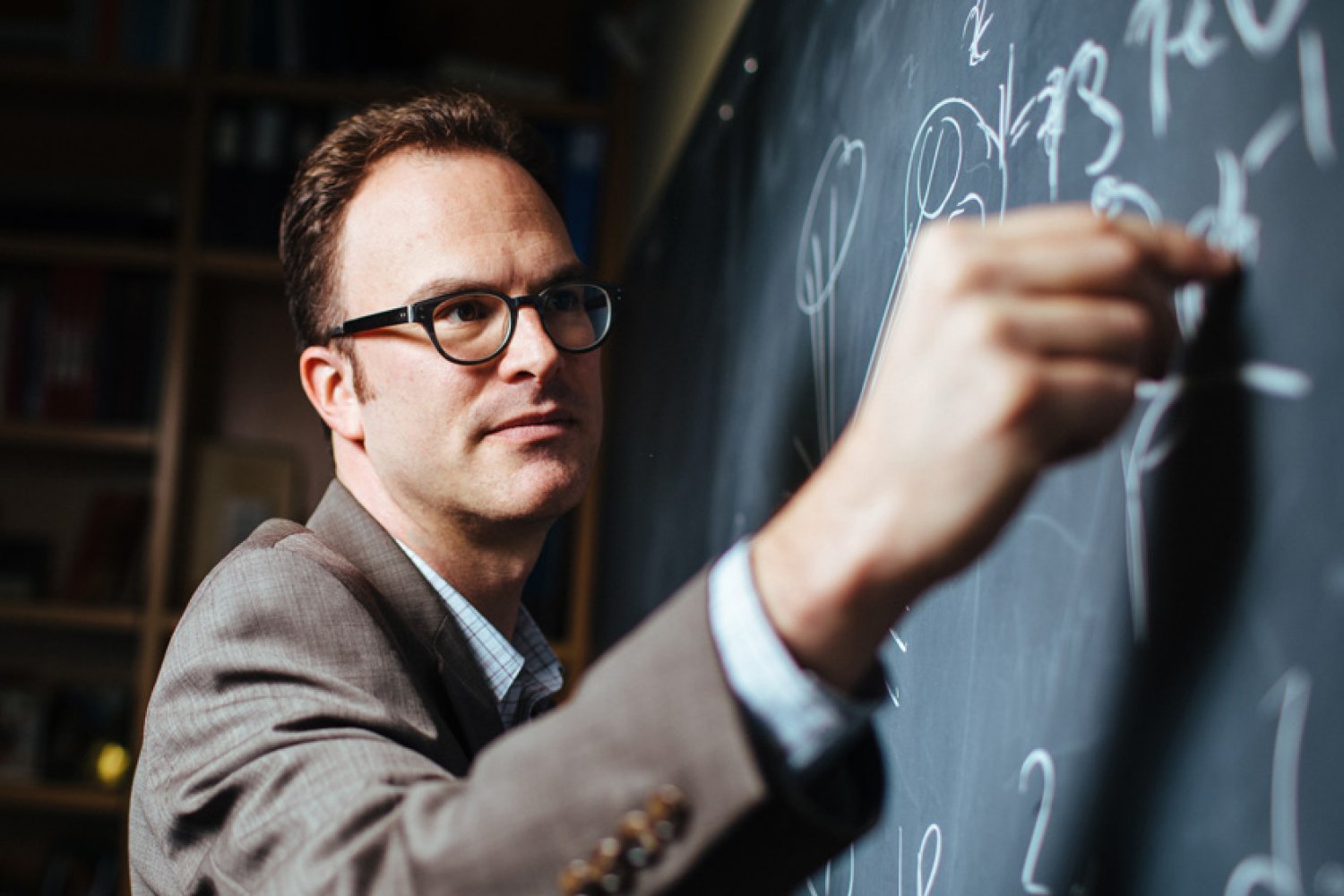
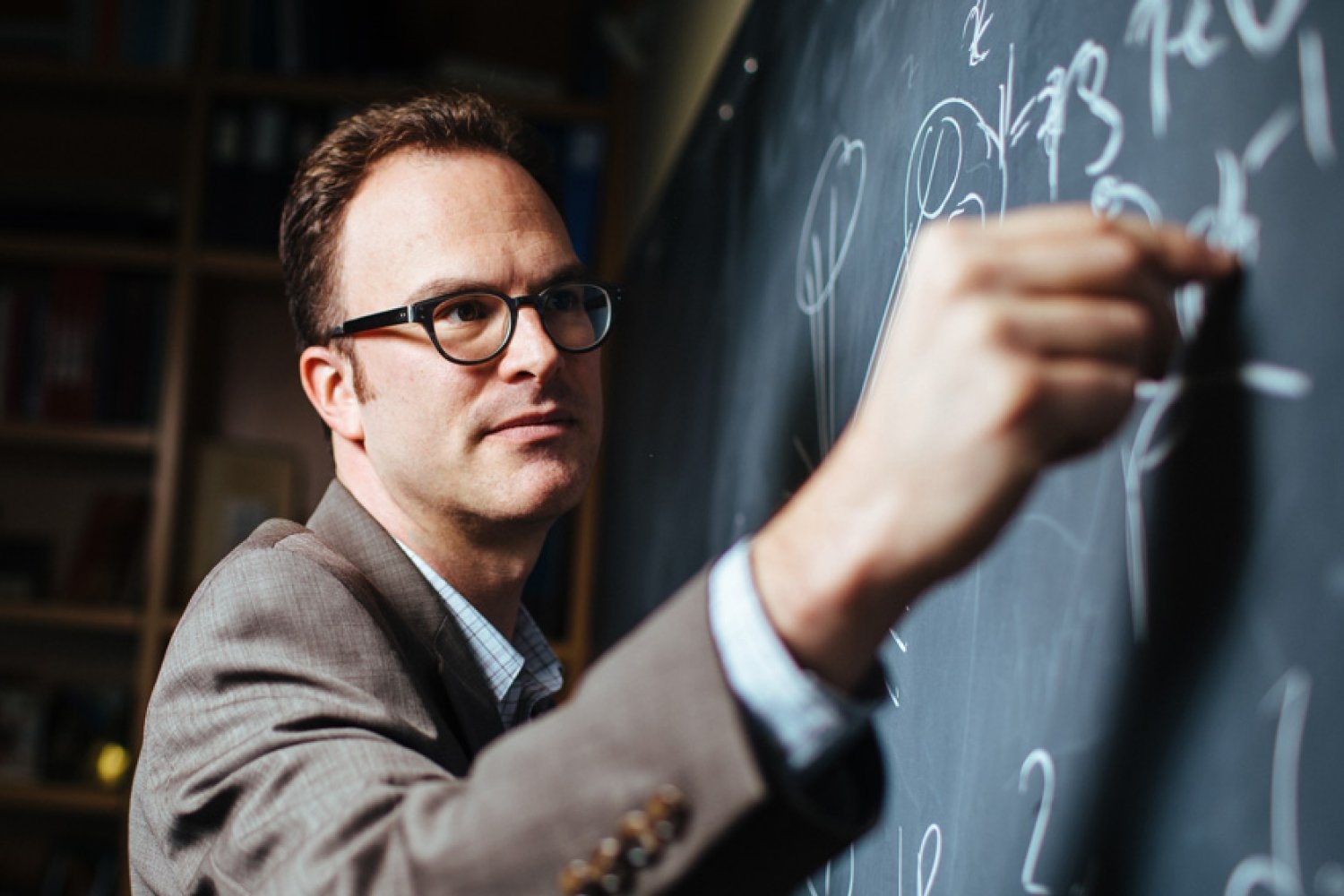
    Professor Jesse Thaler has been named director of the MIT Laboratory for Nuclear Science (LNS), effective Aug. 1. He succeeds Professor Bolek Wyslouch, who directed LNS for the past decade. Thaler is a theoretical particle physicist who combines techniques from quantum field theory and machine learning to address outstanding questions in fundamental physics. 

    “In his research, Jesse has done pioneering work on particle jets at the Large Hadron Collider and is a leader in combining AI and machine learning with fundamental particle physics,” says Nergis Mavalvala, dean of the MIT School of Science and the Curtis and Kathleen Marble Professor of Astrophysics. “The collaborative nature of his research programs will serve the Laboratory for Nuclear Science as science enters a new era of AI-driven discovery.”

    Thaler is the William and Emma Rogers Professor of Physics in the MIT Center for Theoretical Physics — a Leinweber Institute (CTP-LI). Since 2020, he has served as inaugural director of the National Science Foundation (NSF) AI Institute for Artificial Intelligence and Fundamental Interactions, or IAIFI, which was recently renewed for another five years. Mike Williams, professor of physics, will succeed Thaler as IAIFI director. LNS is also poised to pursue new research projects through the Department of Energy’s Genesis Mission, which has a focus on AI-enabled scientific discovery.

    “In my own field of particle physics, researchers are developing cutting-edge AI algorithms to handle the data deluge from collider experiments and to perform heroic theoretical calculations. This work has direct implications for discovering new physics, but the algorithms themselves turn out to be valuable well beyond our field,” says Thaler. “I’m excited to bring LNS into the next wave of discoveries supported by AI-driven capabilities.”

    At IAIFI, Thaler has championed education and research activities at the intersection of physics and AI. With the MIT Institute for Data, Systems, and Society, IAIFI leadership created a doctoral program in physics, statistics, and data science. IAIFI also created dedicated postdoctoral fellowships to give early-career researchers the freedom to pursue interdisciplinary work. 

    “Giving young scientists space to build connections across domains, universities, and career stages has been transformative within IAIFI,” says Thaler, who hopes to bring this type of framework to LNS. Established in 1946 to support nuclear and particle physics, LNS now encompasses research spanning cosmology, gravity, field theory, and quantum information science.

    As head of LNS, Thaler will also oversee his home center of CTP-LI, which last year received a donation from the Leinweber Foundation to establish a network of theoretical physics research institutes. According to the Science Philanthropy Alliance, a nonprofit organization that promotes philanthropy for science, this constitutes the largest philanthropic commitment ever for this field.

    Thaler received his PhD in physics from Harvard University in 2006, and his BS in math/physics from Brown University in 2002. From 2006 to 2009, he was a fellow at the Miller Institute for Basic Research in Science at the University of California at Berkeley. He joined the MIT faculty in 2010.

    Share. Facebook Twitter Pinterest LinkedIn Tumblr Email
    InfoForTech
    • Website

    Related Posts

    How MIT students are helping to prevent cyberattacks | MIT News

    July 14, 2026

    AutoMem teaches AI to actually remember

    July 13, 2026

    New method aims to keep kids safe from illegal AI-generated content | MIT News

    July 13, 2026

    The Case For Rebooting Democracy With AI

    July 10, 2026

    Tiny robot boats build floating structures | MIT News

    July 10, 2026

    Protecting Your Work as AI Models Rapidly Come and Go

    July 9, 2026
    Leave A Reply Cancel Reply

    Advertisement
    Top Posts

    DoJ Disrupts 3 Million-Device IoT Botnets Behind Record 31.4 Tbps Global DDoS Attacks

    March 20, 202638 Views

    Microsoft is bringing an AI helper to Xbox consoles

    March 14, 202618 Views

    Why Security Validation Is Becoming Agentic

    March 16, 202616 Views

    This is the tech that makes Volvo’s latest EV a major step forward

    January 24, 202616 Views
    Stay In Touch
    • Facebook
    • Twitter
    • Pinterest
    • Instagram
    • YouTube
    • Vimeo
    Advertisement
    About Us
    About Us

    Our mission is to deliver clear, reliable, and up-to-date information about the technologies shaping the modern world. We focus on breaking down complex topics into easy-to-understand insights for professionals, enthusiasts, and everyday readers alike.

    We're accepting new partnerships right now.

    Facebook X (Twitter) YouTube
    Most Popular

    DoJ Disrupts 3 Million-Device IoT Botnets Behind Record 31.4 Tbps Global DDoS Attacks

    March 20, 202638 Views

    Microsoft is bringing an AI helper to Xbox consoles

    March 14, 202618 Views

    Why Security Validation Is Becoming Agentic

    March 16, 202616 Views
    Categories
    • Artificial Intelligence
    • Cybersecurity
    • Innovation
    • Latest in Tech
    © 2026 All Rights Reserved InfoForTech.
    • Home
    • About Us
    • Contact Us
    • Privacy Policy

    Type above and press Enter to search. Press Esc to cancel.

    Ad Blocker Enabled!
    Ad Blocker Enabled!
    Our website is made possible by displaying online advertisements to our visitors. Please support us by disabling your Ad Blocker.